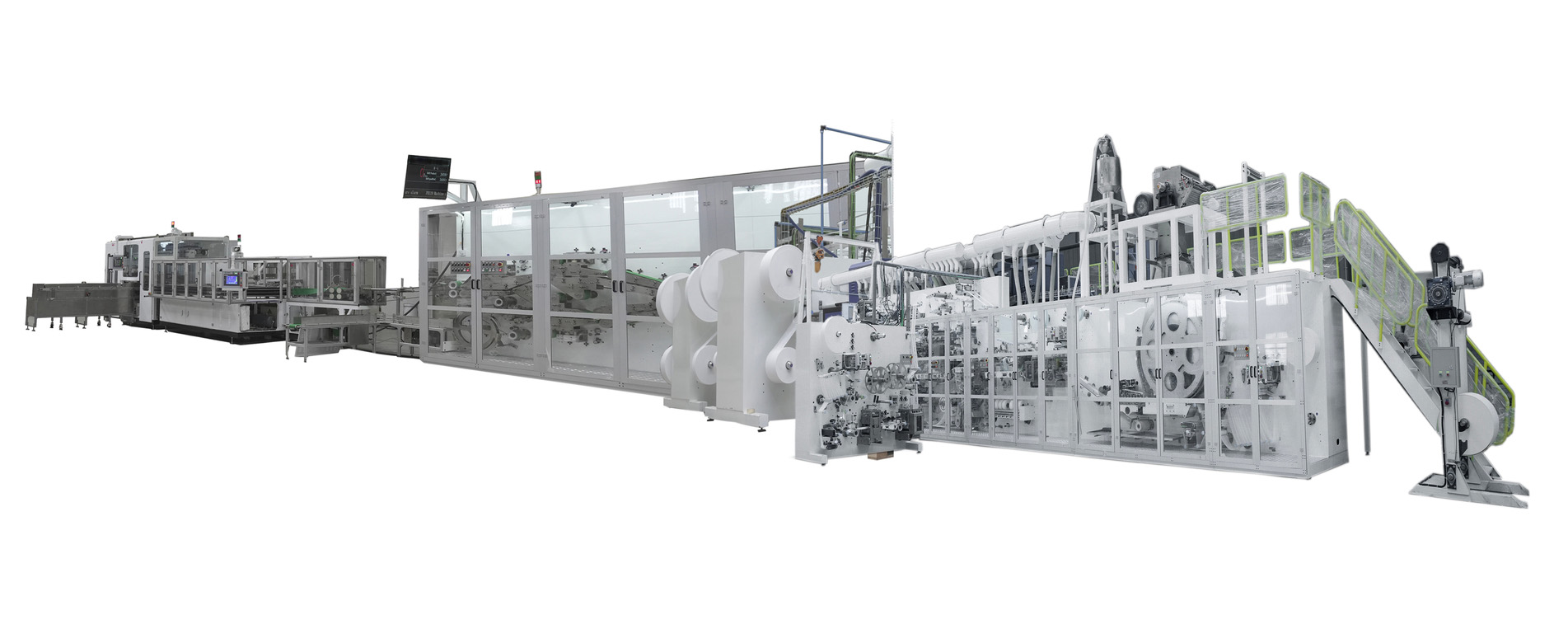
Investing in a sanitary napkin production line is a major capital decision. Whether you are expanding an existing facility or launching a new hygiene product venture, choosing the right machine directly impacts your product quality, production capacity, and long-term profitability. This guide walks through the key factors every production manager and factory owner should evaluate.
Different markets demand different product specifications. Some regions prefer ultrathin winged sanitary napkins, while others prioritize thicker, more absorbent pads. A quality sanitary napkin making machine should offer flexible customization—allowing you to adjust product size, thickness, wing design, and packaging format. This flexibility ensures your line can adapt to shifting market trends without requiring a new machine investment.
Machine speed is often the first spec buyers look at, but consistent, reliable output matters more than a headline number. A machine running at 800–1000 pcs/min with minimal downtime and low rejection rates will outperform a faster machine plagued by frequent stoppages and material waste. Look for full-servo driven systems, which provide precise synchronization across unwinding, forming, cutting, folding, and stacking. Servo-driven machines eliminate mechanical transmission lag, resulting in smoother operation and fewer defects.
A sanitary napkin production line is only as reliable as its components. Machines built with brand-name parts—such as Mitsubishi, Siemens, SICK, Schneider, NSK/SKF, BST, FIFE, or SMC—offer superior durability and service life. CNC-machined key components ensure long-term stable operation even under 24-hour continuous production. Before purchasing, ask your supplier about the origin and brand of core components.
A machine that is difficult to operate or maintain will drain your resources in the long run. Modern sanitary napkin machines should feature intuitive PLC/HMI interfaces that are easy for operators to learn. Modular design is also critical—it simplifies maintenance, allows quick part replacement, and reduces downtime. The ability to switch between product sizes and styles in minutes (not hours) is a hallmark of a well-designed machine.
SAP (superabsorbent polymer), pulp, nonwoven fabrics, and adhesive are all significant cost inputs. An intelligent machine with precise servo control can optimize material usage—reducing waste of topsheet, backsheet, elastics, and adhesives. Even a modest reduction in rejection rate translates into meaningful savings over a year of operation. Look for machines with features like intelligent tension control and precise adhesive application.
This is arguably the most overlooked factor. Hygiene product manufacturing equipment is complex, and when something goes wrong, you need fast, competent support. The best manufacturers offer comprehensive turnkey service: site selection advice, installation, commissioning, operator training, and ongoing technical support. Ask whether the supplier sends engineers overseas for on-site service and machine updates, and how quickly they respond to service requests.
Production environments are becoming increasingly data-driven. A future-ready sanitary napkin making machine should support Industry 4.0 features—integrated data acquisition (OEE tracking, output monitoring, waste analysis), and compatibility with factory automation systems. This data helps you identify bottlenecks, optimize processes, and continuously improve production efficiency.
| Feature | Entry-Level Machine | Mid-Range Machine | High-End Full-Servo Machine |
|---|---|---|---|
| Control System | Frequency motor / Semi-servo | Semi-servo / Partial servo | Full-servo |
| Production Speed | Moderate | Fast | Up to 1000 pcs/min |
| Product Consistency | Standard | Good | Excellent (micron-level precision) |
| Material Waste Rate | Higher | Moderate | Lowest |
| Changeover Time | Longer | Moderate | Fastest (minutes) |
| Maintenance Requirement | Higher | Moderate | Lowest |
| Core Component Brands | Standard brands | Mixed brands | World-famous brands (Mitsubishi, Siemens, SICK, Schneider, NSK/SKF) |
| Industry 4.0 Ready | No | Optional | Yes (OEE tracking, data acquisition, remote monitoring) |
| Best For | Startups with limited budget | Growing businesses | High-volume production, premium quality focus |
1. What is the difference between a full-servo and a semi-servo sanitary napkin making machine?
A full-servo sanitary napkin making machine uses servo motors on every critical axis—unwinding, forming, cutting, folding, and stacking—providing precise synchronization and micron-level accuracy. A semi-servo machine only uses servo drives on certain sections, with other parts driven by traditional mechanical transmission. Full-servo machines offer higher output quality, lower waste rates, faster changeovers, and reduced maintenance costs, making them the preferred choice for serious manufacturers aiming for consistent premium product output.
2. How much floor space does a sanitary napkin production line require?
A standard sanitary napkin production line typically requires approximately 28m × 7m (L×W) of floor space, plus additional room for material storage, operator access, and maintenance clearance. Total installation area usually ranges from 250–400 square meters depending on the machine configuration and auxiliary equipment. It is advisable to consult with the manufacturer during the site planning phase to ensure adequate space allocation.
3. What after-sales support should I expect from a sanitary napkin machine manufacturer?
A reliable manufacturer should provide comprehensive turnkey service including site selection advice, installation, commissioning, operator training, and ongoing technical support. The best suppliers offer lifetime service with engineers available for overseas installation and maintenance, and send technicians regularly to service and update machines. When evaluating a sanitary napkin machine supplier, ask about their global service network, response times, spare parts availability, and whether they provide remote diagnostics and support.
Choosing a sanitary napkin making machine is not about finding the cheapest option or the fastest speed rating. It is about finding the right balance of speed, reliability, flexibility, and support that matches your specific production needs and market goals. Take the time to evaluate suppliers carefully, visit their facilities if possible, and ask for references. A well-chosen machine will serve your business for years to come.
WhatsApp : +8615859535393
Email : aria@firstonemachine.com
Tel : +86 -15859535393


Tel: +86 -15859535393 Email: aria@firstonemachine.com