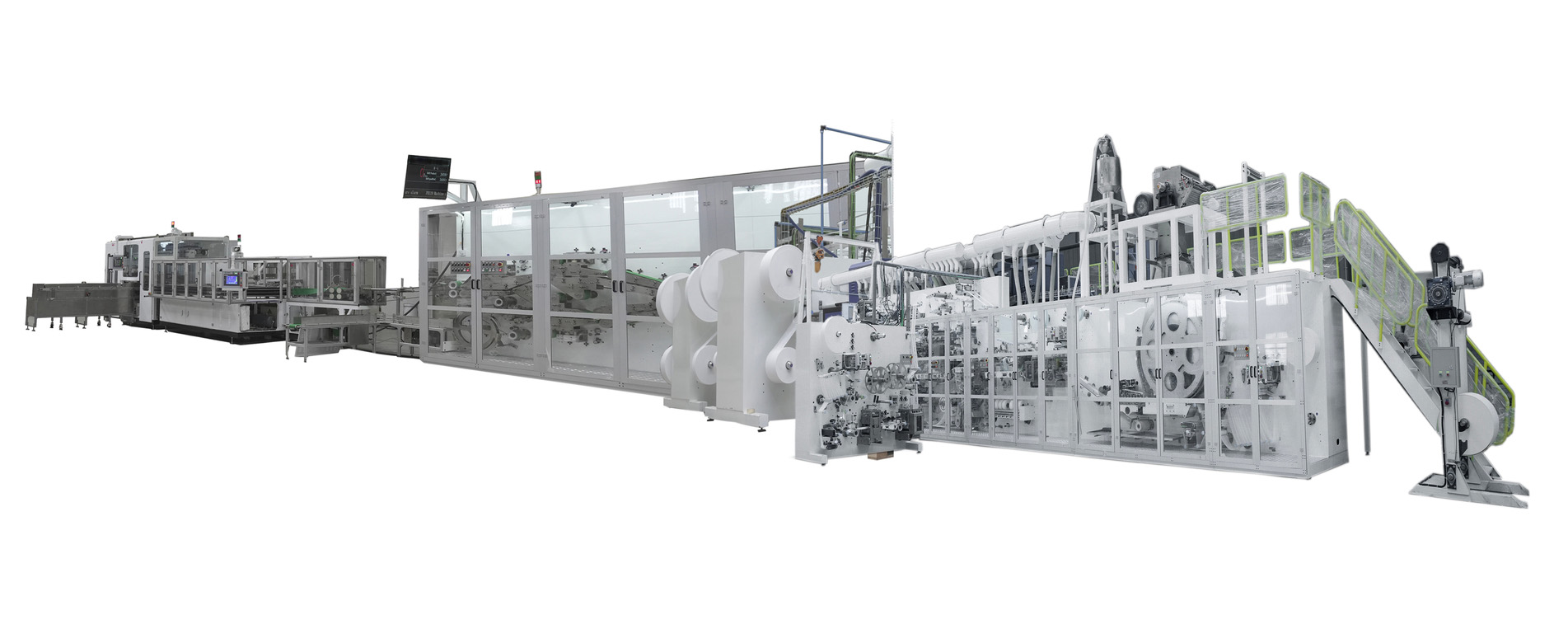
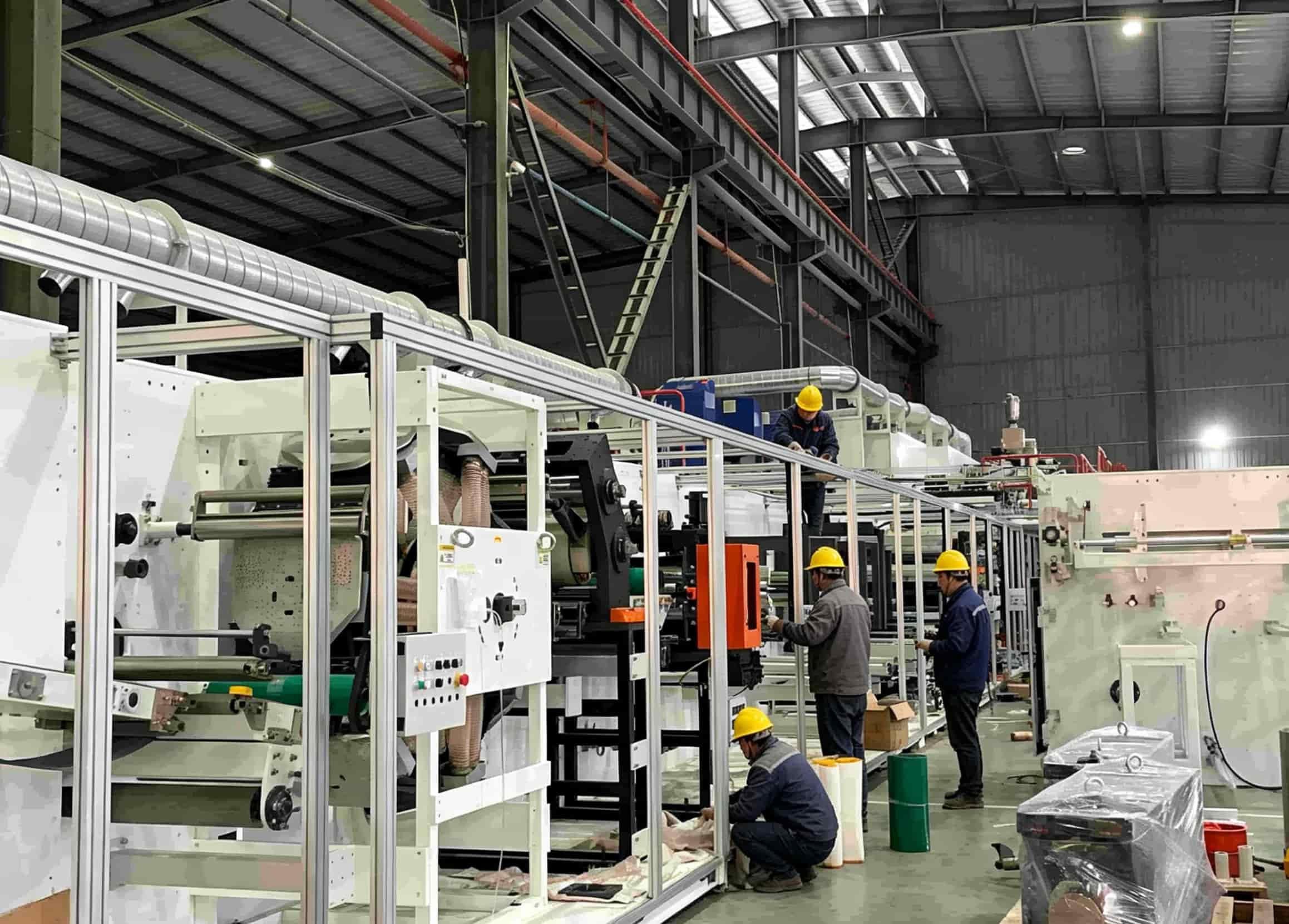
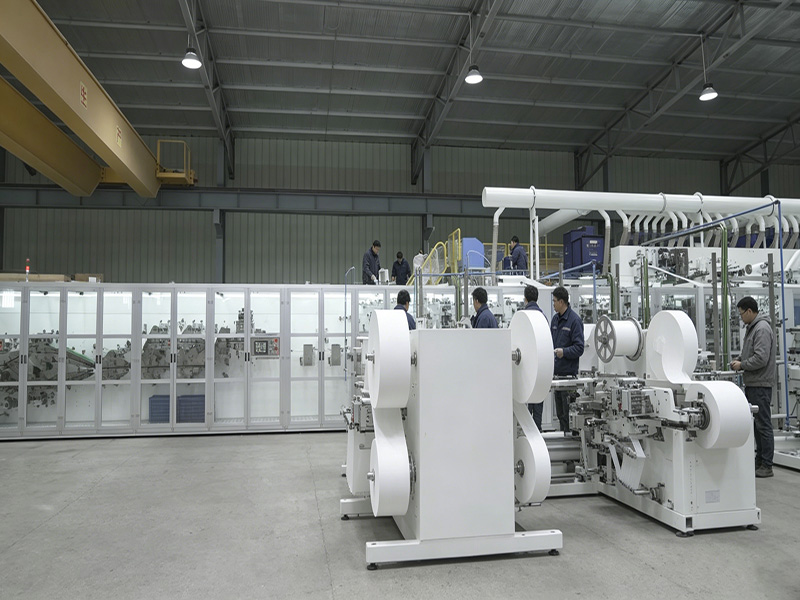
For factory owners running adult diaper machinery, improving production output without sacrificing quality is the single most effective way to increase profitability. In a competitive global market, even a 5% improvement in yield or a 10% increase in line speed translates directly to bottom-line gains. This article examines five technical upgrades that can significantly boost the performance of your adult diaper production line.
1. Upgrade to Full-Servo Drive Systems
Traditional mechanical cam-driven lines are reliable but limited in speed and flexibility. Replacing or upgrading to a full-servo drive system allows independent control of each station — from the pulp mill to the final cut. This reduces mechanical wear, enables faster changeovers between product sizes, and increases line speed from 200–250 pieces per minute (PPM) to 350–400 PPM. The return on investment for a servo retrofit typically occurs within 12 to 18 months for medium-volume factories.
2. Implement Real-Time Process Monitoring with IoT Sensors
Adding IoT sensors at critical stations — SAP (super absorbent polymer) dosing, elastic waistband tension, ultrasonic bonding pressure — creates a closed-loop feedback system. When the system detects deviation from set parameters, it automatically adjusts before defective products are produced. Factories using real-time monitoring report defect rate reductions of 30–50%, directly increasing the number of sellable products per shift.
3. Optimize the SAP Dosing and Mixing Station
Super absorbent polymer accounts for roughly 30% of the raw material cost in adult diapers. Inaccurate dosing wastes expensive material or produces substandard absorbency. Upgrading to a gravimetric dosing system with continuous weighing achieves dosing accuracy within ±0.5 grams. This not only reduces material waste by 8–12% but also ensures consistent product quality — a critical factor for winning long-term contracts with distribution partners. Every diaper making machine benefits from precise material control.
4. Automate the Tear-Proof Tape and Elastic Waistband Application
Adult diapers require robust tear-proof tapes and larger elastic waistbands compared to baby diapers. Manual or semi-automatic tape applicators create bottlenecks and inconsistent placement. Upgrading to a fully automatic tape and elastic waistband applicator with servo-driven alignment ensures that every tape tab is placed within 0.5 mm tolerance. This upgrade alone can eliminate up to 15% of quality rejections related to tape positioning, directly improving overall equipment effectiveness (OEE).
5. Adopt a Modular Vacuum Conveyor System for Material Handling
Bulk material handling — fluff pulp, SAP, nonwoven fabrics — is often overlooked as a source of downtime. A modular vacuum conveyor system with automated filter cleaning and material level sensors reduces clogging and material bridging. Combined with a centralized dust collection unit, this upgrade minimizes cleaning downtime by up to 40% and extends the service life of downstream components. Reliable material flow is the foundation of any optimized hygiene production optimization strategy.
Comparing Key Upgrade Options
Upgrade
Expected Output Gain
Defect Reduction
Typical Payback Period
Full-Servo Drive System
+40–60% line speed
10–15%
12–18 months
IoT Real-Time Monitoring
+5–10% downtime reduction
30–50%
6–12 months
Gravimetric SAP Dosing
+8–12% material savings
5–8%
8–14 months
Automatic Tape Applicator
+5–15% less rework
Up to 15%
10–16 months
Modular Vacuum Conveyor
+40% less cleaning downtime
5–10%
12–20 months
Conclusion
Upgrading your adult diaper production line does not require a complete machine replacement. Strategic investments in servo drives, IoT monitoring, precise dosing, automatic taping, and material handling systems each deliver measurable gains in output and quality. Factory owners who evaluate their current line's bottleneck and target the most impactful upgrade first will see the fastest return. As the global demand for adult incontinence products continues to grow — projected to exceed USD 30 billion by 2030 — those who optimize production efficiency today will be best positioned to capture market share tomorrow.