Essential Quality Control Systems for Your Baby Diaper Production Line
May 24, 2026
Quality consistency is the single most important factor that separates successful hygiene product manufacturers from the rest. In the competitive baby diaper market, a single defective batch can damage brand reputation, trigger customer complaints, and lead to costly product returns. Implementing robust quality control (QC) systems on your baby diaper production line is not optional—it is essential for long-term business success.
1. Inline Inspection Technologies You Need
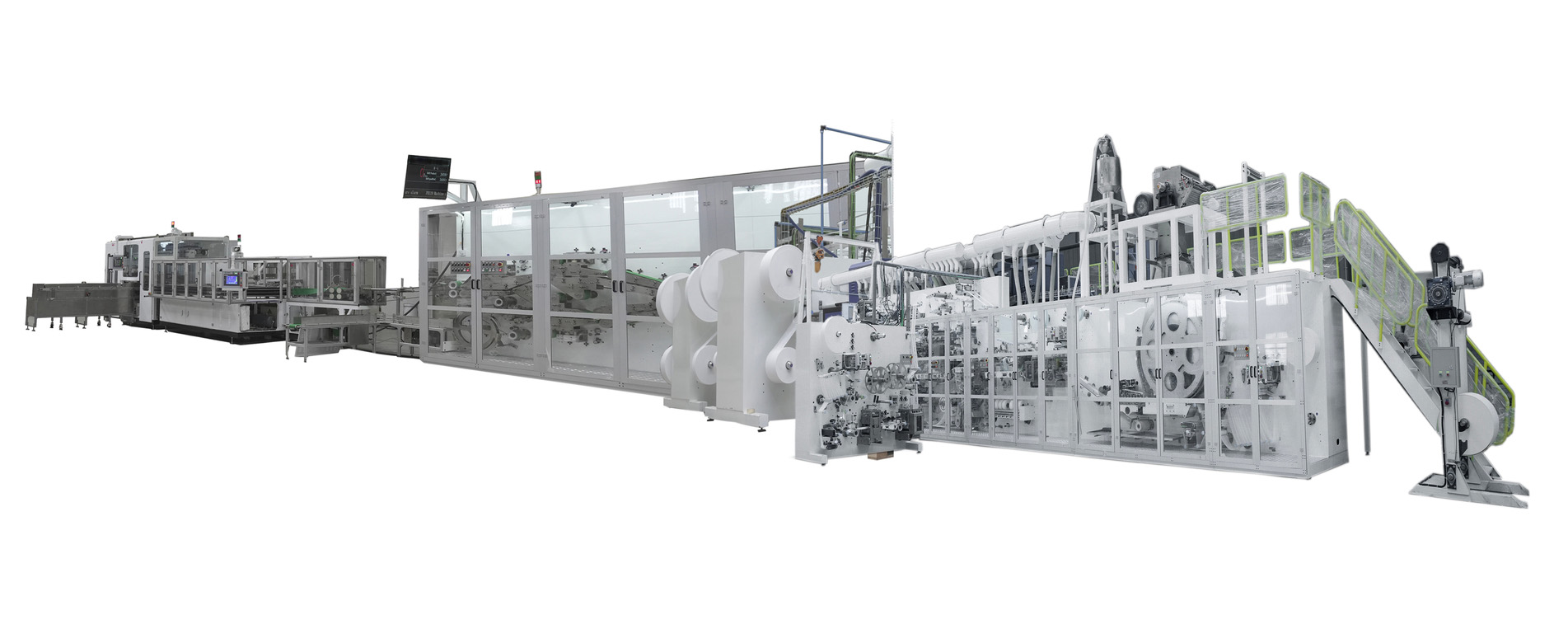
Modern fully automatic manufacturing lines integrate multiple inspection stations that monitor product quality in real time. Vision inspection systems use high-speed cameras to detect defects such as misaligned tapes, missing elastics, improper leg cuff formation, and contamination on the topsheet. Metal detectors and X-ray inspection units ensure that no foreign objects enter the final product. Weight sensors verify that each diaper contains the correct amount of absorbent core material. These inline systems catch defects the instant they occur, allowing operators to correct issues before thousands of defective units are produced.
2. Process Control Parameters That Define Quality
Quality begins with precision process control. On a high-quality baby diaper production line, every parameter must be tightly monitored and controlled. SAP (superabsorbent polymer) distribution uniformity, pulp fluff density, adhesive spray patterns, elastic tension, and embossing pressure all directly affect the final product's performance. Full-servo drive systems provide micron-level precision on these parameters, ensuring consistent output from the first diaper to the millionth. The ability to store and recall recipes for different product sizes (S, M, L, XL) minimizes setup errors during changeovers.
3. Online vs. Offline Quality Testing
Quality assurance programs should combine both online and offline testing. Online testing happens continuously during production—vision inspection, basis weight monitoring, and pressure sensors that verify sealing integrity. Offline testing involves periodic sampling for lab analysis: absorbency rate tests, rewet tests, tensile strength measurements, and dimensional checks. A well-designed QC protocol might test one diaper per minute online and pull a full lab sample every hour. This dual approach provides both real-time process feedback and comprehensive product validation.
4. Rejection and Waste Management Systems
Even the best-controlled production line produces some rejects. What matters is how those rejects are handled. Advanced baby diaper machines feature automatic rejection systems that divert defective products at full line speed—without stopping production. These systems sort rejects by defect type, enabling root cause analysis. For example, if vision inspection detects a pattern of leg cuff defects from a particular forming drum, maintenance can target that specific station. This data-driven approach to waste management reduces overall rejection rates and improves material efficiency.
5. The Role of Operator Training in Quality
Technology alone cannot guarantee quality. Well-trained operators are essential for maintaining QC standards. Operators should be trained to interpret inline inspection data, perform routine calibrations on sensors and cameras, and respond quickly to alarm conditions. A production facility that invests in both advanced diaper making machine technology and operator skill development will consistently outperform competitors who neglect either component.
Quality Control System Comparison
QC Feature
Manual Inspection
Semi-Automated System
Full-Servo Integrated QC
Inspection Speed
Slow (sample-based)
Moderate
Real-time (every unit)
Defect Detection Rate
Moderate
Good
Excellent (micron precision)
Rejection Handling
Manual sorting
Semi-automatic diverter
Automatic at line speed
Data Logging
Paper records
Basic digital logs
Full OEE tracking & analysis
Operator Dependence
High
Moderate
Low (system-driven)
Changeover Quality Risk
High
Moderate
Low (recipe-based recall)
Waste Rate Impact
Higher waste
Moderate waste
Lowest waste
Best Suited For
Small-scale production
Mid-volume production
High-volume, premium quality focus
Frequently Asked Questions
1. What is the difference between online and offline quality testing on a baby diaper machine?
Online quality testing occurs continuously during production using inline sensors, cameras, and inspection systems built into the baby diaper making machine. These systems monitor every single diaper for visual defects, weight consistency, and seal integrity—all at full production speed. Offline testing involves taking representative samples from the production run and testing them in a lab for absorbency, rewet, tensile strength, and dimensional accuracy. The best QC programs combine both methods: online inspection for real-time defect detection and offline lab testing for comprehensive product validation.
2. How can I reduce the rejection rate on my baby diaper production line?
Reducing rejection rate starts with investing in a high-precision baby diaper production line equipped with full-servo drives and integrated vision inspection. Key strategies include: maintaining strict raw material quality standards (especially for SAP, pulp, and nonwoven fabrics), performing regular sensor calibration, storing precise changeover recipes to minimize setup errors, training operators to interpret QC data, and using automatic rejection systems that sort defects by type for targeted root cause analysis. A well-optimized line with full-servo control can achieve rejection rates well below 3%.
3. What inspection technologies are most important for baby diaper quality?
The most critical inspection technologies for modern hygiene product manufacturing include: high-speed vision cameras that check tape placement, elastic positioning, leg cuff formation, and topsheet condition; metal detectors and X-ray units for foreign object detection; weight-based SAP distribution sensors for core consistency; and pressure transducers for sealing integrity. These technologies, when integrated into a full-servo production line with centralized data logging, provide comprehensive quality assurance that protects your brand reputation and reduces costly waste.
Final Thoughts
Quality control in baby diaper manufacturing is not just about catching defects—it is about building a system that prevents defects from occurring in the first place. By combining advanced inline inspection technology with precise process control, automated rejection handling, and thorough operator training, manufacturers can achieve the consistency and reliability that the modern baby diaper market demands. When evaluating a new production line, look for integrated QC capabilities as a core feature, not an afterthought.