Sanitary Napkin Production Line Cost Analysis: What Manufacturers Need to Know Before Investing
May 12, 2026
Investing in a sanitary napkin production line is a significant capital decision that directly impacts your factory's profitability and market competitiveness. While the feminine hygiene market continues to expand across Africa, Southeast Asia, and the Middle East, many manufacturers jump into production without fully understanding the cost structure and return dynamics. This article breaks down the real costs and profit drivers every investor should evaluate before committing to a sanitary napkin machine purchase.
Initial Investment: What Are You Really Paying For?
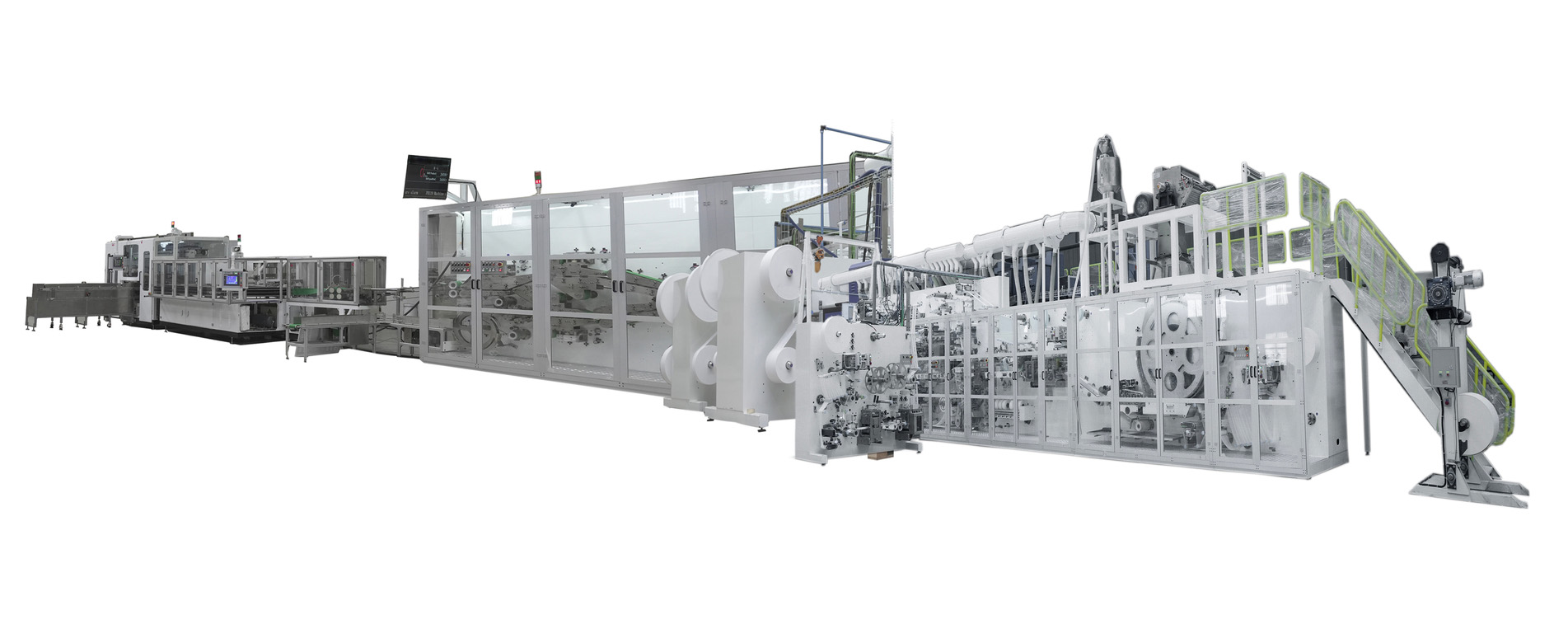
The upfront cost of a sanitary napkin production line varies widely depending on automation level, production speed, and configuration. Entry-level semi-automatic lines may start at a lower price point, but they typically sacrifice output consistency and labor efficiency. Mid-range and high-end full-servo sanitary napkin production lines command higher upfront costs but deliver measurable advantages in speed, waste reduction, and product quality.
The price difference between a mechanical cam-driven line and a full-servo line can be significant, but the total cost of ownership tells a different story. When evaluating lines, consider not just the machine price but also installation, training, initial tooling, and first-year consumables — these hidden costs can add substantially to your initial budget.
Operating Costs: The Hidden Profit Killers
Raw material efficiency is the single largest factor in long-term profitability. A modern sanitary napkin production line with servo-controlled material feeding can reduce pulp and SAP (super absorbent polymer) waste significantly compared to older mechanical systems. For a line producing at medium speed, this waste reduction alone translates into meaningful annual savings.
Labor costs also shift dramatically with automation level. A semi-automatic line may require 4–6 operators per shift, while a fully automatic full-servo line can run with 2–3 operators. In markets where skilled labor is scarce or expensive, this difference becomes a decisive competitive advantage.
Production Speed and Throughput: The Revenue Side
Factor
Semi-Auto Line
Full-Servo Line
Hybrid Line
Max Speed (pcs/min)
150–200
350–500
250–350
Operators per Shift
5–6
2–3
3–4
Waste Rate
4–6%
1.5–3%
3–4%
Daily Output (8h)
65,000–85,000
150,000–200,000
100,000–140,000
Payback Period
Longer
Fastest
Moderate
Power Consumption
Moderate
Lower per unit
Moderate
The table above illustrates that while a full-servo line has a higher sticker price, its superior throughput and lower operating waste translate into a significantly more favorable return profile. For manufacturers targeting high-volume markets or private label contracts, the full-servo option almost always wins on total cost of production.
Market Dynamics: Why Now Is the Right Time
The global sanitary napkin market is projected to grow steadily through 2030, driven by rising female education, increased awareness of menstrual hygiene, and government distribution programs in developing nations. Countries like Nigeria, Ethiopia, Bangladesh, and Indonesia are seeing rapidly growing demand that outstrips local production capacity.
For investors, this means a well-timed diaper making machine investment — adapted for sanitary napkin production — can capture market share before competitors scale up. The window of opportunity is particularly narrow in regions where import duties on finished products are rising, making local production increasingly attractive.
Key Cost-Saving Features to Look For
When comparing sanitary napkin production line quotes, prioritize these features that directly impact your bottom line:
Servo-driven unwinding and tension control — reduces material tear and waste during production
Automatic defect detection and rejection — prevents off-spec products from reaching packaging, saving downstream costs
Quick-change mold systems — minimizes downtime when switching between product sizes or absorbency levels
Energy-efficient servo motors — can cut power costs by a significant margin compared to hydraulic or pneumatic systems
Integrated packaging module — eliminates the need for a separate packaging line and reduces floor space requirements
Real-World ROI Example
Consider a medium-sized factory investing in a mid-range full-servo sanitary napkin production line. With two-shift daily operation and strong market demand, the combination of high throughput, low waste, and reduced labor requirements creates a compelling return on investment.
By contrast, a semi-automatic line with a lower upfront investment might seem cheaper, but the lower output and higher waste rate significantly extend the time to recoup the investment while generating less annual profit. The math clearly favors higher automation when capital is available.
For manufacturers still building experience, starting with a used or reconditioned line can reduce the entry barrier, but hygiene product manufacturing experience shows that new full-servo equipment almost always yields better long-term value at substantial production volumes.
Final Thoughts
The sanitary napkin market offers substantial growth opportunities for manufacturers who enter with the right equipment strategy. By carefully evaluating upfront costs, operating efficiency, and target market pricing, you can make an informed decision that maximizes ROI while building a sustainable production operation. Whether you are a first-time investor or expanding an existing factory, a full-servo sanitary napkin production line represents the most reliable path to long-term profitability in today's competitive hygiene product landscape.