other
  • Baby Diaper Production Line Costs: What to Expect When Starting Your Diaper Manufacturing Business May 08, 2026
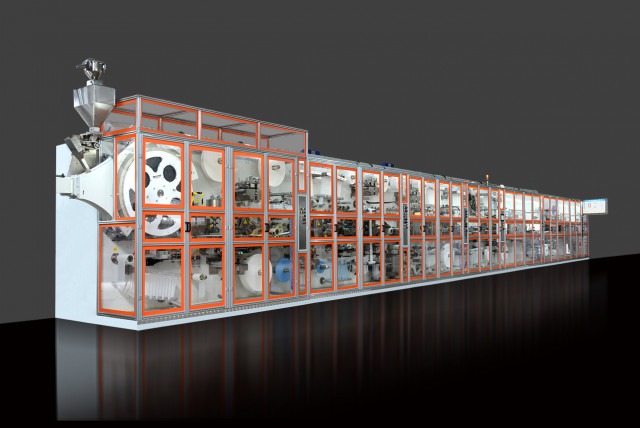
    Starting a baby diaper manufacturing business requires significant upfront planning — and the single biggest question every new factory owner asks is: how much does a baby diaper production line actually cost? The answer isn't a simple number, because the investment varies dramatically based on speed, automation level, brand reputation, and configuration. Understanding these cost drivers can save you tens of thousands of dollars and prevent costly mistakes. Let's break down the typical cost structure. Entry-level production lines (80–150 pieces per minute) for basic T-shape diapers start around $80,000–$120,000. These machines are suitable for small startups testing the market, but they come with higher labor requirements and lower output consistency. Mid-range lines (200–350 ppm) with servo-driven systems — the kind most serious manufacturers target — range from $180,000 to $350,000. They offer better energy efficiency, less material waste, and dramatically lower defect rates. High-speed fully automatic lines (400–600+ ppm) can exceed $500,000, but they deliver the lowest per-unit cost and are the only economical choice for large-scale production. Beyond the machine itself, you must budget for installation, training, and auxiliary equipment. A typical cost breakdown for a mid-range baby diaper making machine setup looks like this: Cost Item Estimated Range (USD) Notes Core Production Line $160,000 – $800,000 Main machine with servo motors, vacuum system Installation & Commissioning $8,000 – $15,000 Engineer travel, setup, calibration Operator Training (1–2 weeks) $3,000 – $6,000 On-site or factory training program Raw Material Handling System $10,000 – $25,000 SAP pulp mill, core forming unit Packaging Equipment $15,000 – $40,000 Counting, stacking, bagging line Spare Parts & Tooling Kit $5,000 – $12,000 First-year spare parts, changing parts Factory Preparation (electric, air) $10,000 – $30,000 Compressed air, power supply upgrades Total Estimated Investment $211,000 – $928,000   Now, let's talk return on investment. Assuming a mid-range 250 ppm line running two 8-hour shifts per day, 300 days a year, you can produce approximately 72 million diapers annually. At a conservative gross margin of $0.015–$0.025 per diaper, the annual gross profit ranges from $1.08 million to $1.8 million. This means a typical mid-range production line pays for itself within 4–8 months of full operation. Of course, these numbers depend heavily on your raw material costs, local labor rates, and selling price — but the math clearly favors automation. Another often-overlooked cost factor is maintenance. A quality baby diaper production line with full servo control and premium components will cost more upfront but typically delivers 10–15 years of reliable operation with annual maintenance spending of just 2–3% of the machine's value, compared to 5–8% for budget machines. Over a decade of operation, this difference alone can reach $100,000+ in cumulative savings. This is why many experienced factory owners choose a diaper production line cost that prioritizes quality and longevity over the lowest initial price. Finally, don't forget financing and import costs. If you're importing from a manufacturer overseas, factor in shipping ($3,000–$8,000), customs clearance (5–15% depending on your country), and potential import duties. Some suppliers offer financing options or phased payment terms — for example, 30% deposit, 60% before shipment, and 10% after installation — which can significantly ease the initial cash flow burden. Choosing the right diaper manufacturing investment partner who provides transparent pricing and after-sales support is just as important as the machine itself. Investing in a baby diaper production line is a major decision, but with proper budgeting and realistic ROI projections, it's one of the most profitable moves in the hygiene manufacturing industry today. If you'd like a detailed quotation tailored to your production targets and budget, contact us — we'll help you find the right configuration for your factory.
  • Choose the Right High-Speed Line for Your Hygiene Products: Baby Diaper, Adult Diaper, Sanitary Napkin & Pet Pad
    Choose the Right High-Speed Line for Your Hygiene Products: Baby Diaper, Adult Diaper, Sanitary Napkin & Pet Pad Jan 01, 2026
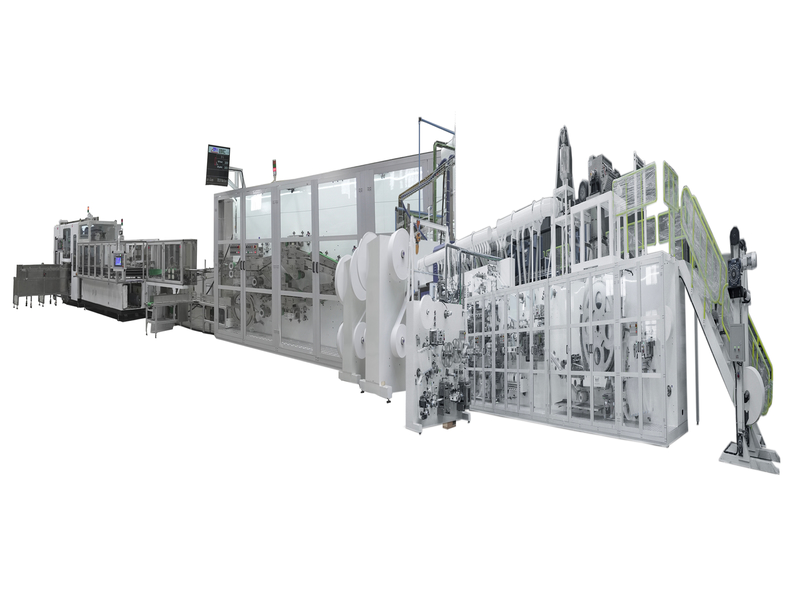
    If you’re planning to set up or upgrade a hygiene product factory, one critical decision stands out: which high-speed production line to choose for baby diapers, pull-ups, adult care products, sanitary napkins, or pet pads. The right line speed, quality, flexibility, and cost. Below is a practical guide based on real-world industry experience.   1. Baby Diaper & Baby Pull-Up Lines: Prioritize Softness + Speed Best for : Newborn to toddler diapers, training pants, pull-ups. Recommended speed: · Baby diaper line speed: 600–700 ppm · Baby pull-up line speed: 500–600 ppm  · Key features: · Full servo drive + auto tension control  · Ultrasonic welding (softer waist/leg cuffs)  · SAP precision dosing (no leakage, consistent absorbency) · AI vision inspection (defect detection + auto reject) · Ideal output: About 1,008,000 pcs / month.   2. Adult Diaper & Adult Pull-Up Lines: Prioritize Absorbency + Comfort Best for : Adult diapers, incontinence briefs, Adult pull-ups. Recommended speed : · Adult diaper line speed : 250–320 ppm · Adult pull-up line speed : 280–300 ppm · Key features: · Reinforced high-absorbency core  · Stretch waist + elastic leg cuffs  · Skin-friendly hot melt (low irritation)  · Low-noise, stable 24 / 7 operation  · Ideal output: About 460,800 PCS / month.    3. Sanitary Napkin Lines: Prioritize Ultra-High Speed + Precision Best for : Sanitary napkins, period panties.  Sanitary napkins line speed: 800–1,000 ppm Period panties line speed: 300 ppm Key features:  · Multi-layer lamination (topsheet → core → backsheet)  · PID-controlled hot melt (±1°C accuracy)  · 360° visual inspection (99.97% defect detection)  · Quick size change (15 min for day/night/heavy flow)  · Ideal output: About 1,440,000 PCS / month.    4. Pet Pad & Underpad Lines: Prioritize Width + Absorbency Best for : Pet training pads, disposable underpads. Recommended speed: 250–700 ppm Key features: · Wide-format handling (600–800mm)  · 5-layer structure (nonwoven + tissue + fluff pulp + SAP + PE)  · Web guider (Deviation range ±0.5mm)  · Ideal output: About 1,008,000 PCS /month.   5. Universal Must-Haves for All Lines Regardless of product type, insist on: · Full servo system: Stable speed, low waste (<3%) · PLC + HMI: Easy operation, recipe storage · Safety standards: CE/ISO compliant, safety guards, emergency stops · After-sales: 24/7 technical support, spare parts availability Final Tip: Match Line Speed to Your Market · Small/medium market: 300–500 ppm lines (flexible, lower investment) · Large/export market: 600–1,000 ppm lines (high volume, lower unit cost)  
  • What are the differences between T-shape diapers and I-shape diapers?
    What are the differences between T-shape diapers and I-shape diapers? Jan 26, 2024
    T-shape Diapers  Refers to the flat shape of the disposable diaper when unfolded, resembling the letter "T". It has "small wings" with adhesive strips, which need to be unfolded, adhered, and fixed onto the baby's abdomen.   I-shape Diapers  Refers to a type of diaper whose overall structure resembles the letter "I", being a complete waist pant without separate attached wings. Its waist is a 360-degree wrap-around elastic waistband. If you want to know more about disposable diapers, please feel free to contact us at any time.
  • How to Start a Business with a Baby Diaper Machine
    How to Start a Business with a Baby Diaper Machine Dec 10, 2024
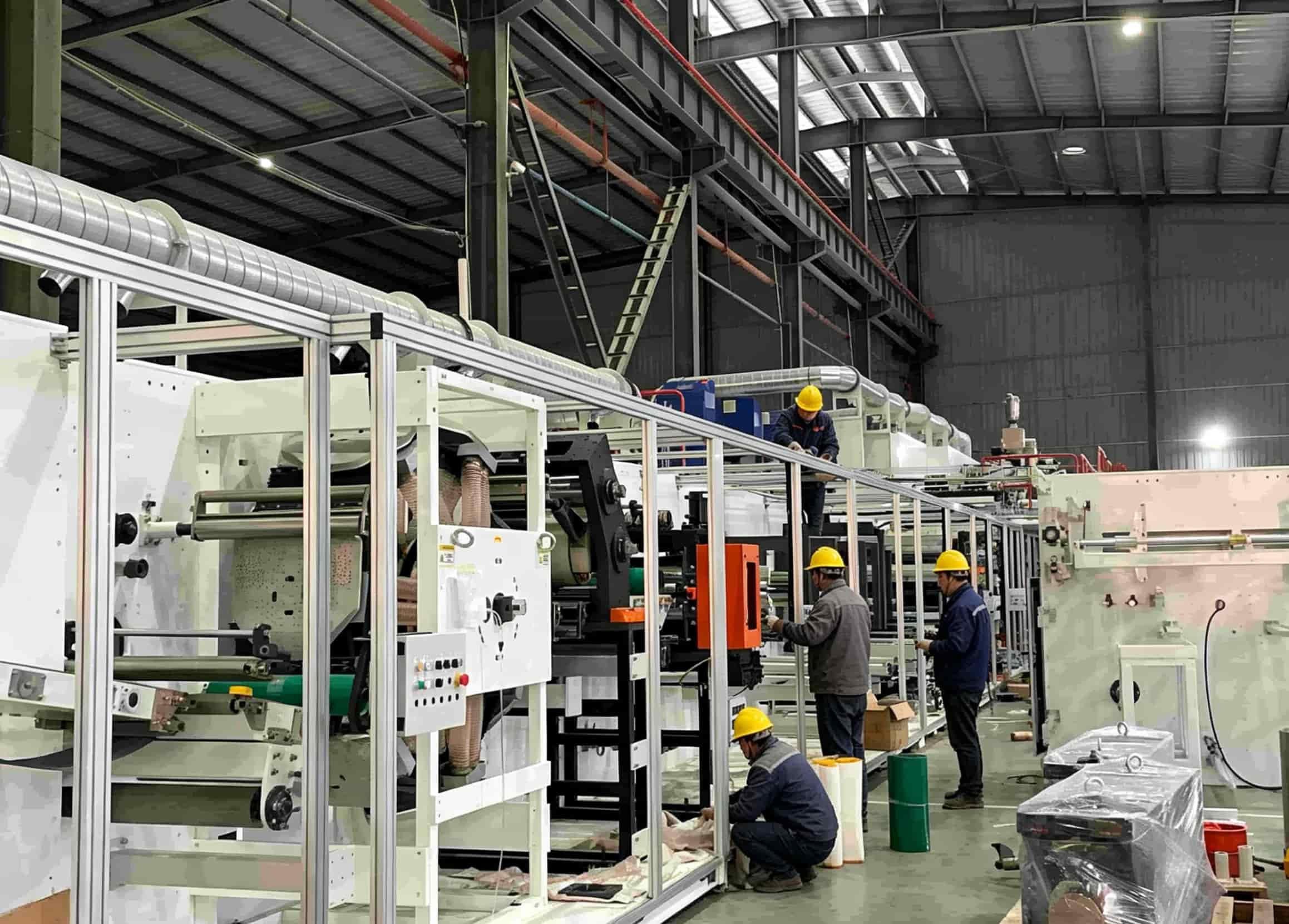
    The global demand for diapers—from baby to adult variants keeps rising, making a diaper manufacturing business a lucrative venture. If you’re ready to start diaper factory, the right production machine is your most critical investment. Here’s a step-by-step guide to launch successfully.   First, conduct market research. Identify your target audience (e.g., parents, healthcare facilities for adult diapers) and local regulations. This shapes your product range and ensures compliance, laying the groundwork for your diaper manufacturing business.At the same time, the specifications, models and grades of the products to be produced must be determined.   Next, choose a high-performance diaper production machine. Look for models with PLC control—this feature enables precise, automated operations, reducing human error and boosting efficiency. Full servo motors are another must: they deliver consistent speed and torque, ensuring uniform diaper quality even during long production runs. Modular design is also key; it lets you adapt the machine to make different diaper size without major overhauls, saving time and money as your business grows. These features directly address the core needs of anyone looking to start diaper factory.   Then, secure a suitable facility. Ensure it has enough space for the diaper manufacturing machine, raw material storage (like non-woven fabric, absorbent cores), and finished goods. Good ventilation and easy access for logistics will streamline operations.   Finally, test and launch. Run trial productions with your machine to fine-tune settings, then start small-scale sales. Leverage the machine’s fast production speed to meet early demand and scale up gradually.   Starting a diaper manufacturing business doesn’t have to be overwhelming. With the right PLC-controlled, full-servo, modular machine, you can set up a efficient, flexible operation that stands out. Ready to start diaper factory? Invest in equipment that grows with your business—and turn your vision into profit.

leave a message

leave a message
For any request of information or technical support, fill in the form. All fields marked with an asterisk* are required.
Submit
Contact us :
+86 -15859535393

Home

Products

WhatsApp

contact