other
  • Cost-Saving Strategies for Your Baby Diaper Production Line: Optimize Without Compromising Quality May 16, 2026
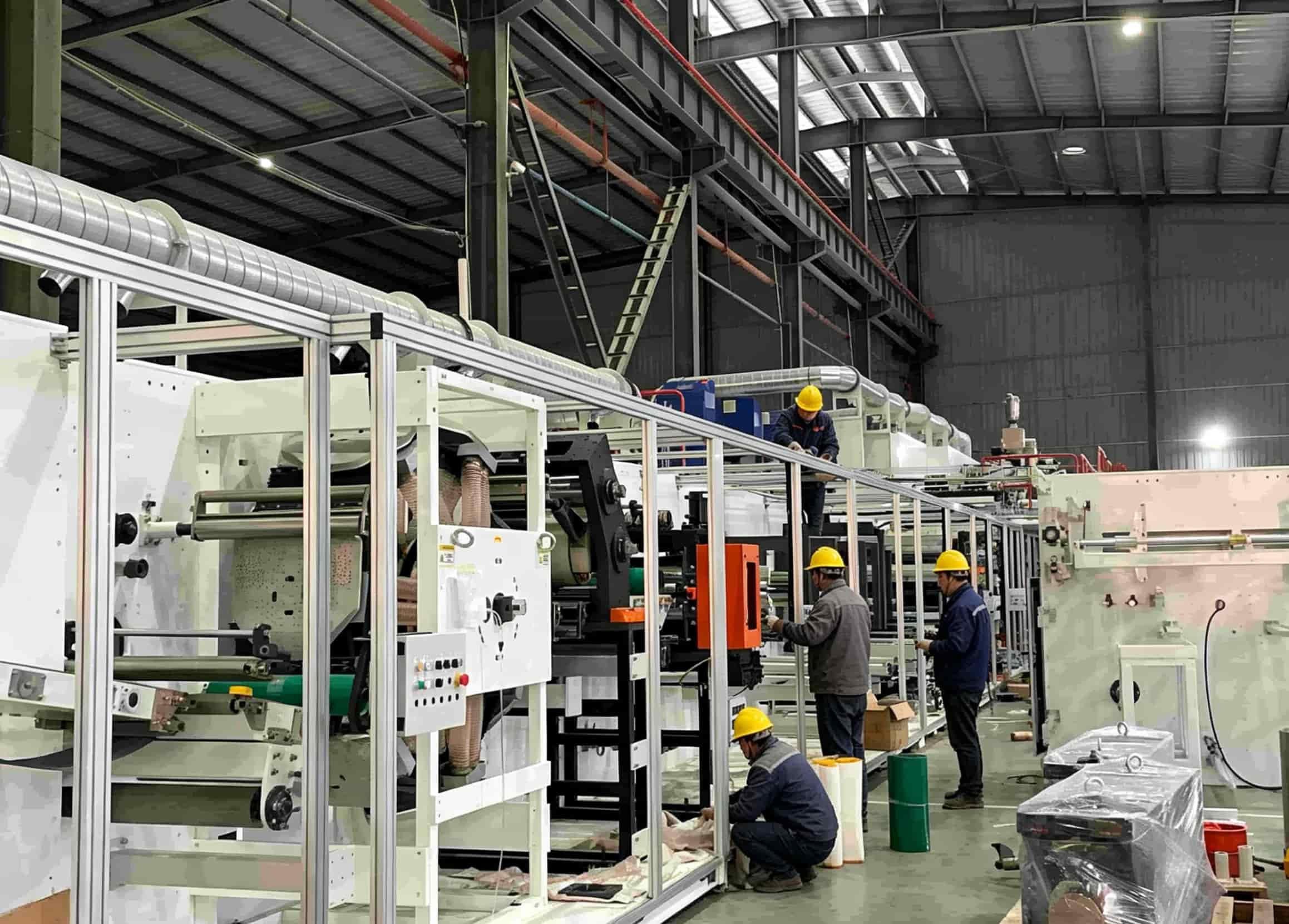
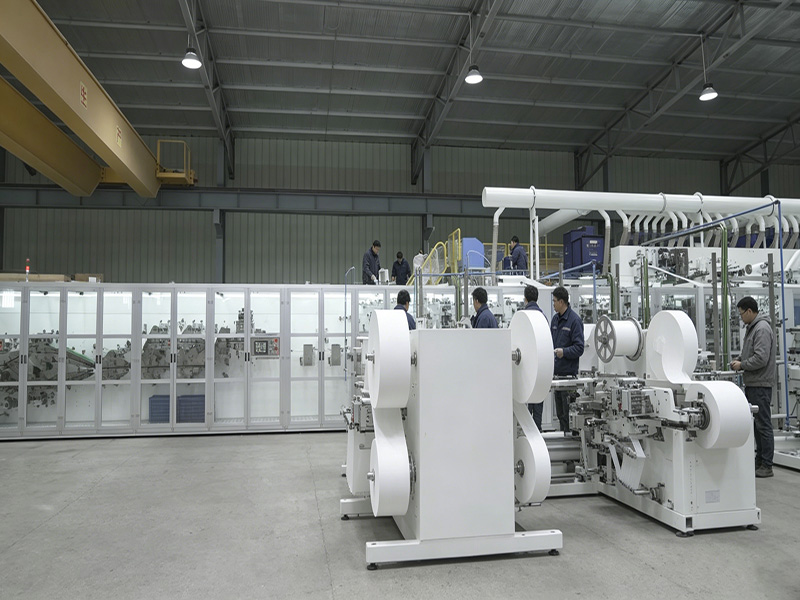
    In the highly competitive hygiene product manufacturing industry, every penny counts. For factory owners running a baby diaper production line, balancing cost reduction with product quality is the constant challenge that defines long-term profitability. With raw material prices fluctuating and market demand for affordable yet reliable baby diapers growing across emerging economies, manufacturers must adopt smart, systematic cost-saving strategies rather than simply cutting corners.This article breaks down four key areas where baby diaper manufacturers can reduce operational costs without sacrificing the final product's absorbency, softness, or safety standards. These strategies apply whether you are running a single line or managing a multi-line factory floor.1. Raw Material Optimization and SourcingRaw materials account for roughly 60–70% of total baby diaper production costs. The largest cost drivers are SAP (super absorbent polymer), fluff pulp, non-woven fabrics, and elastic materials. One of the most effective cost-saving moves is to work closely with multiple qualified suppliers and negotiate bulk purchase agreements. Another approach is to evaluate alternative material grades — for example, using a slightly lower SAP-to-fluff ratio that still meets absorption standards but reduces per-unit cost by 5–8%. Some manufacturers also switch to recycled or blended fluff pulp where regulations permit. However, always run thorough quality tests before switching suppliers or material specs, as an absorbency failure can cost far more in returns and brand damage than the material savings.2. Energy Efficiency and Utility ManagementEnergy consumption — electricity for servo motors, compressed air systems, heating units, and ventilation — is the second-largest variable cost in diaper production. Upgrading to full-servo driven machines can reduce energy usage by 20–30% compared to older mechanical cam systems, even though the initial investment is higher. Installing variable frequency drives (VFDs) on motors, optimizing compressed air pipeline layouts to reduce leakage, and scheduling production during off-peak electricity hours are low-cost, high-return measures. One medium-sized factory in Southeast Asia reported a 15% reduction in monthly utility bills simply by fixing air leaks and installing VFDs across three production lines.3. Reducing Waste and Rework RatesWaste reduction has a direct and immediate impact on cost per diaper. A modern diaper making machine equipped with real-time vision inspection systems can detect defects — misaligned elastic, uneven SAP distribution, seal failures — at line speed and trigger automatic rejection, preventing defective products from reaching the packaging stage. This reduces rework material waste by 10–15%. Additionally, implementing lean manufacturing practices like 5S on the production floor and training operators on preventive maintenance schedules can significantly reduce unscheduled downtime and the waste caused by machine start-up and changeover runs.4. Automation and Labor Cost ReductionLabor is a growing cost in most manufacturing regions. Automating material handling, stacking, and packaging reduces the number of operators needed per shift. A fully automated baby diaper line with robotic palletizing can run with just 2–3 skilled technicians per shift instead of 6–8 workers on a semi-automated line. While the automation upgrade represents a significant upfront investment, the payback period is typically 12–18 months through labor savings alone. Plus, automation improves consistency and reduces the human error that leads to costly re-runs. Investing in hygiene product manufacturing automation is not just about cutting today's costs — it is about future-proofing your factory against rising labor rates and tightening quality standards.Comparison: Traditional vs. Optimized Baby Diaper Production Cost Factor Traditional Approach Optimized Approach Potential Savings Raw Materials Single supplier, standard grades Multi-supplier, alternative blends 5–10% Energy Fixed-speed motors, continuous run Servo drives, VFDs, peak scheduling 15–30% Waste Rate 3–5% reject rate, manual inspection Vision inspection, auto rejection 10–15% reduction Labor 6–8 workers per shift 2–3 technicians per shift 50–70% Conclusion Cost-saving in baby diaper production is not about using cheaper materials or skipping quality checks. It is about strategic optimization across materials, energy, waste control, and automation. By taking a systematic approach, manufacturers can reduce per-diaper cost by 15–25% while maintaining or even improving product quality. Factory owners considering a new line or upgrading existing equipment should carefully evaluate these four areas to maximize their return on investment and stay competitive in the fast-growing global baby diaper market.
  • Baby Diaper Production Line Costs: What to Expect When Starting Your Diaper Manufacturing Business May 08, 2026
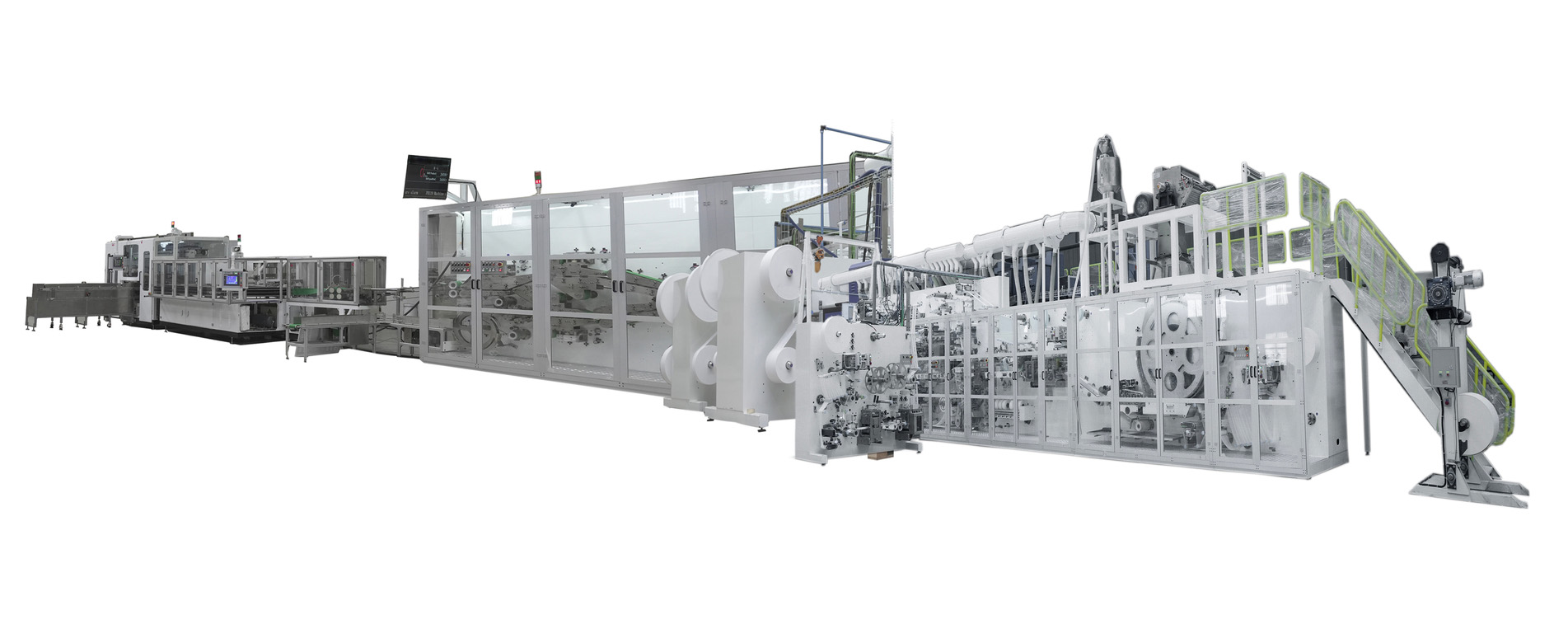
    Starting a baby diaper manufacturing business requires significant upfront planning — and the single biggest question every new factory owner asks is: how much does a baby diaper production line actually cost? The answer isn't a simple number, because the investment varies dramatically based on speed, automation level, brand reputation, and configuration. Understanding these cost drivers can save you tens of thousands of dollars and prevent costly mistakes. Let's break down the typical cost structure. Entry-level production lines (80–150 pieces per minute) for basic T-shape diapers start around $80,000–$120,000. These machines are suitable for small startups testing the market, but they come with higher labor requirements and lower output consistency. Mid-range lines (200–350 ppm) with servo-driven systems — the kind most serious manufacturers target — range from $180,000 to $350,000. They offer better energy efficiency, less material waste, and dramatically lower defect rates. High-speed fully automatic lines (400–600+ ppm) can exceed $500,000, but they deliver the lowest per-unit cost and are the only economical choice for large-scale production. Beyond the machine itself, you must budget for installation, training, and auxiliary equipment. A typical cost breakdown for a mid-range baby diaper making machine setup looks like this: Cost Item Estimated Range (USD) Notes Core Production Line $160,000 – $800,000 Main machine with servo motors, vacuum system Installation & Commissioning $8,000 – $15,000 Engineer travel, setup, calibration Operator Training (1–2 weeks) $3,000 – $6,000 On-site or factory training program Raw Material Handling System $10,000 – $25,000 SAP pulp mill, core forming unit Packaging Equipment $15,000 – $40,000 Counting, stacking, bagging line Spare Parts & Tooling Kit $5,000 – $12,000 First-year spare parts, changing parts Factory Preparation (electric, air) $10,000 – $30,000 Compressed air, power supply upgrades Total Estimated Investment $211,000 – $928,000   Now, let's talk return on investment. Assuming a mid-range 250 ppm line running two 8-hour shifts per day, 300 days a year, you can produce approximately 72 million diapers annually. At a conservative gross margin of $0.015–$0.025 per diaper, the annual gross profit ranges from $1.08 million to $1.8 million. This means a typical mid-range production line pays for itself within 4–8 months of full operation. Of course, these numbers depend heavily on your raw material costs, local labor rates, and selling price — but the math clearly favors automation. Another often-overlooked cost factor is maintenance. A quality baby diaper production line with full servo control and premium components will cost more upfront but typically delivers 10–15 years of reliable operation with annual maintenance spending of just 2–3% of the machine's value, compared to 5–8% for budget machines. Over a decade of operation, this difference alone can reach $100,000+ in cumulative savings. This is why many experienced factory owners choose a diaper production line cost that prioritizes quality and longevity over the lowest initial price. Finally, don't forget financing and import costs. If you're importing from a manufacturer overseas, factor in shipping ($3,000–$8,000), customs clearance (5–15% depending on your country), and potential import duties. Some suppliers offer financing options or phased payment terms — for example, 30% deposit, 60% before shipment, and 10% after installation — which can significantly ease the initial cash flow burden. Choosing the right diaper manufacturing investment partner who provides transparent pricing and after-sales support is just as important as the machine itself. Investing in a baby diaper production line is a major decision, but with proper budgeting and realistic ROI projections, it's one of the most profitable moves in the hygiene manufacturing industry today. If you'd like a detailed quotation tailored to your production targets and budget, contact us — we'll help you find the right configuration for your factory.
leave a message

leave a message
For any request of information or technical support, fill in the form. All fields marked with an asterisk* are required.
Submit
Contact us :
+86 -15859535393

Home

Products

WhatsApp

contact