other
  • Adult Diaper Production Line: Why It Is the Next Big Opportunity in Hygiene Manufacturing May 26, 2026
    The global demand for adult diapers is growing at an unprecedented pace. An aging population, increasing awareness of incontinence care, and rising disposable income in developing markets have all contributed to a surge in demand. For hygiene product manufacturers looking to expand their product portfolio, investing in an adult diaper production line is no longer an option — it is a strategic necessity. Unlike baby diapers, adult diapers come in a much wider range of styles and sizes: tape-type diapers, pull-up pants, pad-type inserts, and belted briefs. Each style requires different machine configurations, absorbent core structures, and elastic application methods. A versatile adult diaper making machine must handle higher absorbent capacity, larger dimensions, and stronger elastic waistbands to accommodate different body types and levels of incontinence. Key Differences Between Baby Diaper and Adult Diaper Production The following table highlights the major technical differences manufacturers must consider when switching from baby diapers to adult diapers: Parameter Baby Diaper Line Adult Diaper Line Product Size Range Small to medium (3-15 kg) Medium to extra-large (40-150+ kg) Absorbent Core Weight 10-30 grams SAP + fluff 25-70 grams SAP + fluff Production Speed 200-600 ppm 100-350 ppm Elastic Waistband Complexity Moderate (front/back elastic) High (360° waistband + leg gathers) Material Consumption Lower per unit 2-3× higher per unit Changeover Flexibility Limited size range per machine Wider size range required What to Look for in an Adult Diaper Production Line When evaluating suppliers for an adult diaper making machine, manufacturers should prioritize the following features: Full Servo Control Systems — Modern adult diaper machines should be equipped with full-servo drives for precise tension control, accurate cut length, and quick size changeovers. Servo-driven systems reduce material waste and improve product consistency compared to mechanical cam-based machines. Modular Design for Multi-Style Production — The best adult diaper production lines offer modular configurations that allow switching between tape-type diapers, pull-up pants, and belted products with minimal downtime. This flexibility is essential for contract manufacturers serving multiple brands. High Absorbency Core Formation Technology — Adult incontinence products require significantly higher SAP (super absorbent polymer) content. Advanced core-forming systems with SAP dosing accuracy of ±0.5 g ensure consistent absorption performance across all products. Elastic Application Systems — A 360° elastic waistband combined with multiple leg gather lines is critical for leak prevention in adult diapers. Machines with multi-lane elastic applicators and programmable tension control deliver superior fit and comfort. Market Trends Driving Adult Diaper Demand According to industry reports, the global adult diaper market is projected to exceed USD 30 billion by 2030, growing at a CAGR of 7-9%. Key drivers include: Aging population: The 65+ demographic is expanding faster than any other age group worldwide Healthcare infrastructure: Hospitals, nursing homes, and long-term care facilities are standardizing adult diaper use Product innovation: Thinner, more discreet designs are reducing the stigma around adult incontinence products Emerging markets: Countries in Southeast Asia, Africa, and Latin America are seeing rapid adoption as disposable incomes rise For manufacturers with existing baby diaper lines, adding an adult diaper production line creates a natural product extension. The raw material supply chains overlap significantly, and the customer base — hospitals, distributors, institutional buyers — is often the same. It also allows factories to operate at higher overall capacity utilization by alternating production between baby and adult products. Conclusion Investing in an adult diaper production line positions your factory to capture one of the fastest-growing segments in the hygiene products industry. With the right machine — featuring full-servo control, modular design, and precise SAP dosing — you can deliver high-quality products that meet the strict standards of healthcare institutions and discerning consumers alike. As the global demographic shift continues, the manufacturers who act now will have a significant head start over those who wait.
  • The Rise of Smart Sanitary Napkin Production Lines: Technology Trends and Market Opportunities May 05, 2026
    The global feminine hygiene market continues to expand, with sanitary napkin demand growing steadily across developing regions in Asia, Africa, and Latin America. For manufacturers looking to enter or scale up in this space, investing in a modern, fully automatic sanitary napkin production line is no longer just an option—it is a strategic necessity. This article explores the key technology trends shaping sanitary napkin manufacturing and the market opportunities that come with them.   Why Sanitary Napkin Manufacturing Is a Growing Opportunity According to industry reports, the global feminine hygiene products market is projected to reach USD 50 billion by 2030, growing at a CAGR of around 5–6%. Urbanization, rising awareness of menstrual health, and improving disposable income in developing countries are driving this growth. For machinery buyers—especially those in emerging markets—setting up a sanitary napkin production line offers a relatively fast path to capturing local demand while building a brand in the hygiene products space.   Unlike baby diapers or adult incontinence products, sanitary napkins require specific production technologies to ensure softness, absorption, leak protection, and comfort. This specialization creates a niche where the right machinery makes all the difference.   Key Technology Trends in Sanitary Napkin Production Lines 1. Full Servo Control Systems Modern sanitary napkin lines are shifting from mechanical cam systems to full servo-driven platforms. A full servo sanitary napkin making machine offers precise control over every production stage—from pulp grinding and forming to embossing and packaging. The benefits include faster changeover times between product sizes, reduced material waste, and higher overall equipment effectiveness (OEE). For factory owners, this translates directly into lower per-unit costs and greater production flexibility.   2. Multi-Layer Material Handling Today's premium sanitary napkins consist of multiple layers: a top sheet, an acquisition distribution layer, an absorbent core (often SAP + fluff pulp), a back sheet, and release paper. Advanced production lines integrate automated unwinding, splicing, and tension control for each layer, minimizing downtime and ensuring consistent product quality. The ability to handle different material combinations without manual intervention is a key differentiator between entry-level and high-end lines.   3. Inline Quality Inspection and Packaging The latest lines incorporate vision inspection systems that detect defects in real time—checking for proper embossing patterns, missing adhesive strips, or misaligned wings. Combined with automatic packaging systems (flow wrap, bagging, or cartoning), these features reduce labor dependency and improve output consistency. For manufacturers supplying both domestic and export markets, having an automatic production line with integrated quality control is a major competitive advantage.   Market Segmentation and Target Products Different markets demand different product formats. Here is a breakdown of popular sanitary napkin types and the production capabilities required:   Product Type Key Features Production Requirement Ultrathin (0.1 cm) SAP core, soft cover, discrete feel Precision SAP dosage, low-temp embossing Maxi / Overnight Extended length, wider back, wings Flexible mold adjustment, wing folding unit Pantyliner Thin, light, less absorbent High-speed lightweight material handling Hybrid / Period Panty Insert Reusable outer + disposable insert Custom die-cut, convertible line design   A versatile diaper making machine platform can often be adapted for pad-type products, but dedicated sanitary napkin lines optimize for the specific material handling and packaging needs of feminine hygiene products.   What to Look for When Buying a Sanitary Napkin Production Line Production Speed and Capacity Entry-level lines run at 150–250 pcs/min, while high-speed lines achieve 400–600+ pcs/min. Your target volume and market pricing should guide this choice. For startups, a medium-speed line with servo control offers the best balance of cost and capability.   Raw Material Compatibility The absorbent core is the heart of any sanitary napkin. Ensure the line supports both airlaid and SAP-core production, and can handle different pulp types. Compatibility with biodegradable and bamboo-based materials is becoming increasingly important as eco-conscious regulations spread across Europe and Southeast Asia.   After-Sales Support and Spare Parts This cannot be overstated: a hygiene product manufacturing line is a long-term asset. Choose a supplier who provides on-site installation, operator training, and a reliable supply of spare parts. Downtime in a sanitary napkin factory means lost revenue and missed delivery deadlines.   Conclusion The sanitary napkin market offers strong and sustained growth, especially in developing regions where penetration rates are still low. Investing in a modern, full-servo sanitary napkin production line positions your factory to capture this demand with high efficiency, consistent quality, and the flexibility to adapt to changing product trends. Whether you are a first-time buyer or expanding an existing hygiene product facility, understanding the technology landscape is the first step toward making a smart investment decision.
  • How to Choose the Right Adult Diaper Production Line for Your Factory May 04, 2026
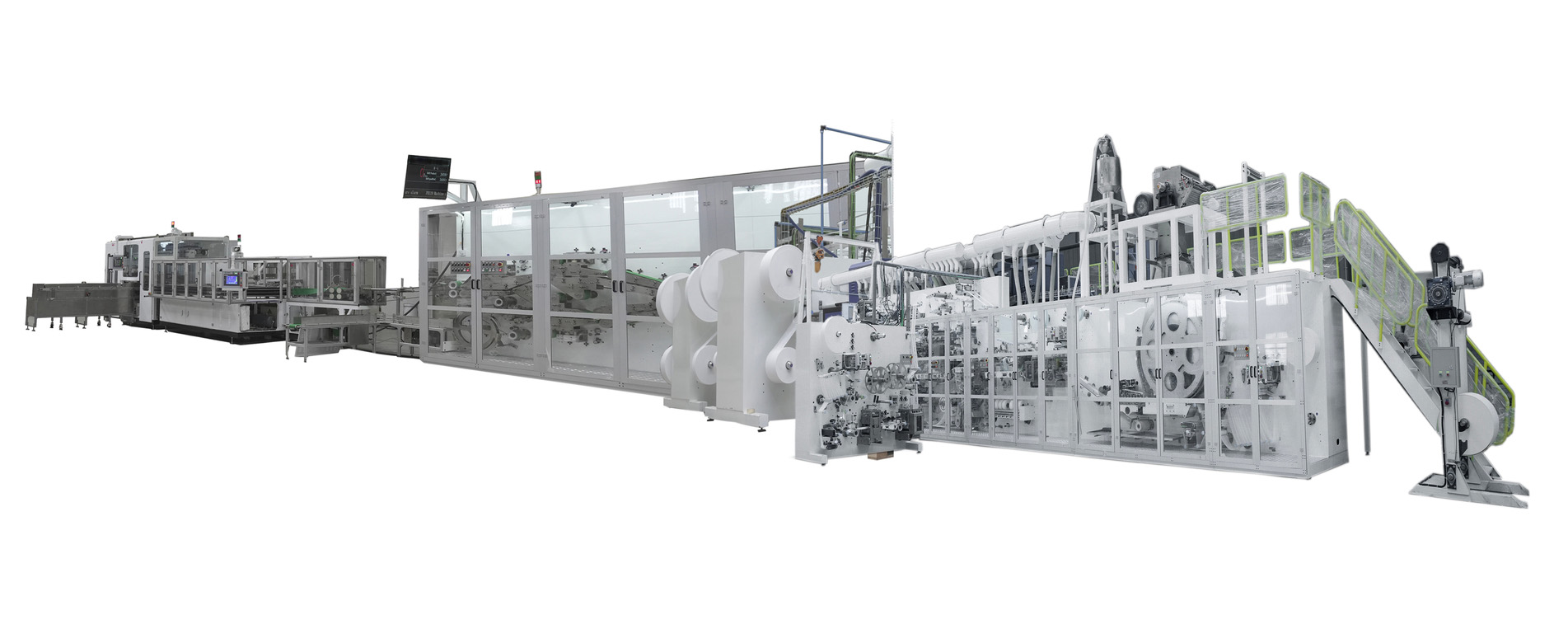
    The global adult diaper market is expanding rapidly, driven by aging populations and rising healthcare awareness. For hygiene product manufacturers, investing in an adult diaper production line is no longer a niche consideration — it's becoming a mainstream business opportunity. But selecting the right machine configuration can be the difference between profit and struggle.Unlike baby diapers, adult diapers come in multiple formats: tape-type (diaper pants with side fasteners), pull-up pants, and pad-style products. Each format requires specific mechanical modules and material handling systems. A general-purpose machine that tries to do everything often ends up doing nothing well. The key is to match your production line to your target market's specific needs.When evaluating an adult diaper production line, there are five critical factors you must consider. First, production speed determines your cost per unit — modern full-servo machines can reach 150–200 pieces per minute, significantly lowering labor costs per diaper. Second, size range flexibility matters because adult users vary tremendously in waist and hip measurements. A good machine should handle S through XXL sizes with minimal changeover time. Third, material compatibility affects both your sourcing options and final product quality. Fourth, automation level directly impacts your labor requirements and consistency. And fifth, after-sales support from the manufacturer can make or break your operation, especially in the first year.A common mistake among new factory owners is prioritizing price over precision. Cheaper machines often use outdated mechanical cam systems that require frequent manual adjustments. In contrast, a full-servo adult diaper machine uses independent servo motors controlled by a central PLC, giving you precise tension control, faster size changes, and lower scrap rates. The upfront cost is higher, but the total cost of ownership over three years is typically 20–30% lower.Here is a comparison of different adult diaper machine configurations to help you evaluate your options: Feature Mechanical Cam Machine Full-Servo Machine Hybrid Machine Speed (pcs/min) 80–120 150–200 100–160 Size Change Time 60–90 min 15–30 min 30–60 min Scrap Rate 5–8% 2–3% 3–5% Labor Required per Shift 6–8 workers 3–4 workers 4–6 workers Initial Investment Medium High Medium-High ROI Period 24–36 months 12–18 months 18–24 months The data clearly shows that full-servo technology delivers superior economics despite a higher entry price. If you plan to run your line for more than two years, the full-servo configuration pays for itself through lower scrap and labor costs alone.Another important consideration is the waistband and elastic application system. Adult diapers require stronger, wider elastics than baby diapers because user weight and movement impose greater stress on the product. A machine with a big waistband module — like the one found on First One Machine's adult diaper machinery — ensures consistent elastic tension across the waist area, reducing leakage risks and improving wearer comfort. This feature is especially important for tape-type adult diapers used in nursing homes and hospitals.For manufacturers who also want to diversify production, consider whether your chosen line can be adapted for related products. Many modern production platforms allow you to switch between adult diapers, baby diapers, and even sanitary napkins with module swaps. A flexible diaper making machine gives you the agility to respond to shifting market demand throughout the year.So what is the right approach for a new factory? Start by conducting a market analysis of your target region. If your customers are primarily hospitals and elderly care facilities, focus on tape-type adult diapers in institutional packaging. If you are targeting retail consumers, pull-up style adult pants in smaller packages are more appropriate. Once you have defined your product mix, work with an experienced machinery supplier to design a production line that fits your volume and budget.In conclusion, the hygiene product manufacturing industry is evolving fast, and adult diapers represent one of the most promising segments for the next decade. Choosing the right production line — one that balances speed, flexibility, and quality — will determine whether you capture this opportunity or watch competitors take the lead.If you need assistance evaluating specific machine configurations for your factory, feel free to reach out to the technical team at First One Machine for a personalized consultation.

leave a message

leave a message
For any request of information or technical support, fill in the form. All fields marked with an asterisk* are required.
Submit
Contact us :
+86 -15859535393

Home

Products

WhatsApp

contact