other
  • Adult Diaper Production Line: Why It Is the Next Big Opportunity in Hygiene Manufacturing May 26, 2026
    The global demand for adult diapers is growing at an unprecedented pace. An aging population, increasing awareness of incontinence care, and rising disposable income in developing markets have all contributed to a surge in demand. For hygiene product manufacturers looking to expand their product portfolio, investing in an adult diaper production line is no longer an option — it is a strategic necessity. Unlike baby diapers, adult diapers come in a much wider range of styles and sizes: tape-type diapers, pull-up pants, pad-type inserts, and belted briefs. Each style requires different machine configurations, absorbent core structures, and elastic application methods. A versatile adult diaper making machine must handle higher absorbent capacity, larger dimensions, and stronger elastic waistbands to accommodate different body types and levels of incontinence. Key Differences Between Baby Diaper and Adult Diaper Production The following table highlights the major technical differences manufacturers must consider when switching from baby diapers to adult diapers: Parameter Baby Diaper Line Adult Diaper Line Product Size Range Small to medium (3-15 kg) Medium to extra-large (40-150+ kg) Absorbent Core Weight 10-30 grams SAP + fluff 25-70 grams SAP + fluff Production Speed 200-600 ppm 100-350 ppm Elastic Waistband Complexity Moderate (front/back elastic) High (360° waistband + leg gathers) Material Consumption Lower per unit 2-3× higher per unit Changeover Flexibility Limited size range per machine Wider size range required What to Look for in an Adult Diaper Production Line When evaluating suppliers for an adult diaper making machine, manufacturers should prioritize the following features: Full Servo Control Systems — Modern adult diaper machines should be equipped with full-servo drives for precise tension control, accurate cut length, and quick size changeovers. Servo-driven systems reduce material waste and improve product consistency compared to mechanical cam-based machines. Modular Design for Multi-Style Production — The best adult diaper production lines offer modular configurations that allow switching between tape-type diapers, pull-up pants, and belted products with minimal downtime. This flexibility is essential for contract manufacturers serving multiple brands. High Absorbency Core Formation Technology — Adult incontinence products require significantly higher SAP (super absorbent polymer) content. Advanced core-forming systems with SAP dosing accuracy of ±0.5 g ensure consistent absorption performance across all products. Elastic Application Systems — A 360° elastic waistband combined with multiple leg gather lines is critical for leak prevention in adult diapers. Machines with multi-lane elastic applicators and programmable tension control deliver superior fit and comfort. Market Trends Driving Adult Diaper Demand According to industry reports, the global adult diaper market is projected to exceed USD 30 billion by 2030, growing at a CAGR of 7-9%. Key drivers include: Aging population: The 65+ demographic is expanding faster than any other age group worldwide Healthcare infrastructure: Hospitals, nursing homes, and long-term care facilities are standardizing adult diaper use Product innovation: Thinner, more discreet designs are reducing the stigma around adult incontinence products Emerging markets: Countries in Southeast Asia, Africa, and Latin America are seeing rapid adoption as disposable incomes rise For manufacturers with existing baby diaper lines, adding an adult diaper production line creates a natural product extension. The raw material supply chains overlap significantly, and the customer base — hospitals, distributors, institutional buyers — is often the same. It also allows factories to operate at higher overall capacity utilization by alternating production between baby and adult products. Conclusion Investing in an adult diaper production line positions your factory to capture one of the fastest-growing segments in the hygiene products industry. With the right machine — featuring full-servo control, modular design, and precise SAP dosing — you can deliver high-quality products that meet the strict standards of healthcare institutions and discerning consumers alike. As the global demographic shift continues, the manufacturers who act now will have a significant head start over those who wait.
  • Raw Material Optimization for Adult Diaper Production Lines: A Manufacturer's Guide May 17, 2026
    In the competitive hygiene product industry, raw material costs typically account for 60–70% of total production expenses. For manufacturers operating an adult diaper production line, optimizing material sourcing and usage is one of the most effective ways to improve margins without sacrificing product quality. This guide covers the key raw materials used in adult diaper manufacturing and practical strategies for cost-effective sourcing and waste reduction. Understanding the Key Raw Materials An adult diaper consists of several specialized layers, each serving a critical function. The main components include: Fluff pulp – The absorbent core's primary component, responsible for liquid retention SAP (Super Absorbent Polymer) – The high-performance polymer that locks moisture inside the core Nonwoven fabric (top sheet & back sheet) – Provides comfort on the skin side and leakage protection on the outer side Elastic materials (leg cuffs & waistband) – Ensures a secure, comfortable fit Adhesives (hot melt & construction) – Bonds layers together during the assembly process Each of these materials has its own price volatility, quality tiers, and supplier landscape. Understanding how to balance cost and quality across all of them is the key to running a profitable operation. Key Optimization Strategies 1. Bulk Procurement and Supplier Consolidation Rather than sourcing from multiple small suppliers for each material type, consolidate your purchases with fewer, larger suppliers. This approach gives you stronger negotiating power and often results in volume discounts of 5–15% on key materials like fluff pulp and SAP. 2. SAP-to-Fluff Ratio Optimization The ratio of SAP to fluff pulp directly affects both absorbency performance and material cost. SAP is significantly more expensive than fluff pulp, but it provides superior liquid retention. By fine-tuning this ratio based on your target market's requirements, you can reduce costs while still meeting performance specifications. For standard adult incontinence products, a lower SAP ratio may be sufficient, while premium products require higher SAP content. 3. Reducing Waste Through Precision Control Modern full-servo diaper making machine systems offer precise control over material feeding, cutting, and placement. This precision minimizes trim waste and reduces the amount of material that ends up as scrap. Factories that upgrade to servo-driven systems typically see raw material waste reductions of 3–8%, which translates into substantial annual savings at scale. 4. Alternative Material Sourcing Explore alternative suppliers in different regions to reduce dependency on a single source. Many manufacturers have found that diversifying fluff pulp sources between South America, North America, and Southeast Asia provides both cost advantages and supply chain resilience. Cost Impact Comparison Strategy Cost Reduction Potential Implementation Complexity Risk Level Bulk Procurement Moderate (5–15%) Low Low SAP Ratio Optimization Significant Moderate Medium (requires testing) Waste Reduction via Servo Control Moderate (3–8%) High (equipment upgrade) Low Supplier Diversification Varies by region Moderate Low (reduces risk) Quality Considerations While material cost optimization is essential for profitability, never compromise on quality to the point where it affects product performance. The best manufacturers continuously test incoming raw materials and monitor finished product quality to ensure that cost savings do not translate into higher defect rates or customer complaints. Investing in a reliable hygiene product manufacturing line with precise material handling capabilities helps maintain quality while reducing waste. Final Thoughts Raw material optimization is not a one-time exercise—it requires ongoing attention to market prices, supplier relationships, and production data. Manufacturers who invest in this area gain a meaningful competitive advantage through lower cost per unit, improved supply chain stability, and better product consistency. Start by auditing your current material usage and identifying the three biggest opportunities for cost savings, then implement improvements one at a time for measurable results.
  • How to Ensure Consistent Quality in Adult Diaper Production Line Manufacturing May 15, 2026
    Quality consistency is the single biggest challenge in adult diaper production. Unlike other hygiene products, adult incontinence briefs must meet higher absorbency standards, stricter leakage prevention requirements, and greater comfort demands — all while keeping production costs in check. For manufacturers investing in an adult diaper production line, understanding the key quality control checkpoints is essential to staying competitive. Raw Material Inspection: The Foundation of Quality The quality of the final product starts with raw materials. Fluff pulp, SAP (super absorbent polymer), nonwoven fabric, elastic materials, and adhesive must all meet strict specifications before entering the diaper making machine. Key parameters to test include: MaterialCritical Quality ParameterAcceptable Range Fluff PulpFiber length & softness2.5–3.5 mm average SAP PowderAbsorption rate & gel strength≥ 30 g/g (0.9% saline) Nonwoven FabricBasis weight & tensile strength15–25 gsm, ≥ 40 N/50mm Elastic MaterialElongation & recovery rate≥ 200% elongation, ≥ 85% recovery Hotmelt AdhesiveViscosity & open time3000–5000 mPa·s at 160°C In-Process Quality Control in Adult Diaper Manufacturing Consistent adult diaper production requires real-time monitoring at multiple stages: 1. SAP Dosing Accuracy SAP is the most expensive raw material in an adult diaper and directly determines absorbency. A deviation of even ±0.5 grams can cause either product failure (insufficient SAP) or margin erosion (excess SAP). Modern servo-driven full-servo production lines can maintain dosing accuracy within ±0.2g, which is critical for premium-quality incontinence products. 2. Ultrasonic Sealing Integrity Leakage is the #1 complaint among adult diaper users. The ultrasonic sealing of leg cuffs, waistbands, and back sheets must be tested every 30 minutes during production. The seal strength should never drop below 15 N/cm — anything less creates pathways for liquid escape. 3. Core Shaping and Distribution For adult pull-up and T-shape diapers, the absorbent core must maintain uniform shape and thickness. Uneven pulp distribution leads to sagging, clumping, and reduced comfort. Online thickness sensors can detect deviations as small as 0.1mm and trigger automatic adjustments in real time. Final Product Testing Protocol Before adult diapers leave the factory, a rigorous final testing protocol should be followed: Absorption Capacity Test: Minimum 800 mL for medium-size adult diapers, repeated every 50 cases Rewet Test: Surface rewet must be ≤ 1.0g after 5 minutes under 3.5 kPa pressure Leakage Test: Zero leakage after 200 mL of test fluid applied at a 30° angle Tensile Strength Test: Side seam and elastic band must withstand ≥ 20N before tearing FIT Test: Visual inspection on sizing mannequins to ensure proper anatomical fit Why Full-Servo Technology Improves Quality Consistency Traditional mechanical production lines rely on gearboxes and mechanical cams, which drift over time and require frequent manual recalibration. Full-servo hygiene product manufacturing technology eliminates this problem by using individually-controlled servo motors for each production station. The benefits include: ±0.1mm positioning accuracy across all cutting and folding stations Digital recipe storage — switch between product sizes in under 10 minutes with zero manual adjustment Real-time torque monitoring — the system can detect a worn bearing or misaligned roller before it creates defective products Production data logging — every batch can be traced back by date, shift, and machine parameters for full traceability Common Quality Defects and Root Causes Understanding what goes wrong helps operators prevent defective output. The most common defects in adult diaper production include: DefectRoot CauseSolution SAP leakage at edgesIncorrect vacuum pressure at SAP deposition stationCalibrate vacuum system; check SAP funnel alignment Leg cuff leakageElastic tension out of specCheck servo encoder feedback on elastic modules Misshapen corePulp mill clogged or hammers wornClean pulp mill; replace hammers every 2000 hours Uneven glue applicationNozzle partially blockedImplement automatic nozzle cleaning every 4 hours Loose waistbandElastic not fully stretched before laminationVerify stretch ratio setting; check dancer roller tension Building a Quality-First Production Culture Equipment alone doesn't guarantee quality. Manufacturers should invest in operator training programs, implement statistical process control (SPC) dashboards on the production floor, and establish clear acceptable quality limits (AQL) aligned with international standards such as ISO 9001 and the applicable medical device regulations for incontinence products. Regular third-party audits every 6 months help identify improvement opportunities that internal teams might overlook. Many leading adult diaper manufacturers also participate in inter-laboratory proficiency testing to validate their in-house testing results against industry benchmarks. Conclusion Quality consistency in adult diaper production is achievable through a combination of precise raw material control, real-time in-process monitoring, rigorous final product testing, and investment in modern full-servo production technology. For manufacturers looking to enter or expand in the incontinence care market, partnering with a reliable production line supplier that understands these quality parameters can significantly shorten the learning curve and reduce time-to-market.
  • How to Reduce Production Costs in Your Adult Diaper Manufacturing Line May 13, 2026
    In the competitive hygiene product industry, adult diaper manufacturers face constant pressure to balance quality with cost. As global demand rises — driven by aging populations in Asia, Europe, and the Americas — the ability to produce high-quality adult diapers at lower unit costs can make or break a factory's profitability. This article explores practical strategies to reduce production costs without compromising product performance. Invest in Fully Servo-Driven Machinery Traditional mechanical cam-driven machines rely on gears, belts, and clutches that consume more energy and require frequent maintenance. Upgrading to a full servo adult diaper machine eliminates mechanical wear points, reduces power consumption significantly, and enables faster changeover between product sizes. Servo-driven systems also provide precise tension control for elastic materials, reducing material waste during the production run. Optimize Raw Material Usage Raw materials account for the majority of the total production cost in adult diaper manufacturing. Small optimizations in material usage translate directly to significant savings. Use a production line with advanced SAP (super absorbent polymer) dosing systems that apply the exact grammage per diaper, avoiding overfill. Similarly, nonwoven fabric tension control systems can reduce fabric consumption meaningfully while maintaining the same absorption core integrity. Reduce Downtime Through Automation Unplanned downtime is the silent killer of production efficiency. Modern adult diaper manufacturing lines equipped with PLC-based diagnostic systems can detect issues — from incorrect elastic tension to misaligned absorbent core placement — before they cause a full line stoppage. Real-time monitoring dashboards allow operators to address problems within seconds rather than minutes. Over a year, even a modest reduction in downtime can increase effective capacity by hundreds of thousands of pieces. Standardize Product Specifications While customization is important for market differentiation, excessive product variations increase changeover frequency and reduce OEE (Overall Equipment Effectiveness). Evaluate your product portfolio quarterly and consider rationalizing low-volume SKUs. Standardizing core absorbent layers and chassis designs across your product range allows longer production runs and fewer material changeovers. Cost Comparison: Traditional vs. Servo-Driven Lines Cost Factor Traditional Mechanical Line Modern Servo-Driven Line Annual Savings Energy consumption Higher Much lower Significant Material waste rate 3–5% 1–2% Significant Maintenance cost Higher Much lower Substantial Changeover time 60–90 min 15–30 min +15% production capacity Operator labor 3–4 per shift 1–2 per shift Meaningful Train Operators for Continuous Improvement A high-quality adult diaper production line is only as efficient as the team running it. Implement a structured operator training program covering preventative maintenance, troubleshooting, and lean manufacturing principles. Factories that invest in operator upskilling typically see significant OEE improvement within the first six months. Simple practices — like daily equipment inspections and proper material handling — reduce unplanned repairs and extend machine lifespan. Conclusion Reducing production costs in adult diaper manufacturing doesn't require a complete factory overhaul. By focusing on servo automation, material optimization, downtime reduction, product standardization, and operator training, manufacturers can achieve significant cost savings while maintaining or even improving product quality. For factory owners planning capacity expansion or equipment upgrades, investing in a fully servo-driven line offers the fastest payback period through energy savings and operational efficiencies alone.
  • How to Choose an Adult Diaper Production Line: Key Considerations for Manufacturers May 11, 2026
    The global adult diaper market is experiencing unprecedented growth, driven by aging populations, rising incontinence awareness, and improving healthcare infrastructure in developing countries. For hygiene product manufacturers looking to expand their product portfolio or enter this lucrative segment, selecting the right adult diaper production line is a critical decision that directly impacts profitability, product quality, and long-term competitiveness.Unlike baby diapers, adult diapers come in multiple formats — tape-style (briefs), pull-up pants, and pad inserts — each requiring different machine configurations. A versatile adult diaper production line should offer quick changeover between styles, allowing manufacturers to adapt to market demand without investing in multiple dedicated lines. Key Technical Specifications to Evaluate When comparing adult diaper machines, pay close attention to these critical parameters: Parameter Entry-Level Mid-Range High-End Design Speed 150-200 pcs/min 250-350 pcs/min 400-600 pcs/min Servo Control Partial servo Full servo (8-12 axes) Full servo (16+ axes) Product Range 1-2 sizes 3-5 sizes 5-8+ sizes Material Waste 5-8% 3-5% 1-3% Changeover Time 60-90 min 30-60 min 15-30 min Price Range $400,000 – $1200,000 Sap Absorption Core — The Heart of Quality The SAP (super absorbent polymer) application system determines your product's core performance — absorption speed, retention capacity, and leak prevention. Look for machines with precision SAP dosing (±0.5g accuracy) and multi-layer core forming capability. High-end machines offer ADL (acquisition distribution layer) integration, which significantly improves liquid distribution and dry-back performance — a key differentiator in premium adult diaper products. Elastic Waistband and Leg Cuff Technology Adult users require superior fit and leakage protection. A quality elastic waistband system and multi-strand leg cuff application are non-negotiable. The adult diaper making machine should feature independent servo-driven elastic application, allowing precise tension control for different body sizes and ensuring consistent product quality at high running speeds. Automation and Data Integration Modern manufacturing demands smart factory capabilities. Prioritize machines with PLC-based control systems, HMI touch interfaces, and optional MES/ERP integration. Real-time production monitoring, defect detection (metal, weight, vision inspection), and automatic rejection systems reduce labor costs and improve yield. Full-servo drive technology also enables energy savings of 15-25% compared to traditional mechanical drive systems. After-Sales Support Matters Most The best machine is worthless without reliable technical support. Choose a supplier that offers on-site installation and commissioning, operator training, remote diagnostics, and a readily available spare parts inventory. Manufacturers like First One Machine provide comprehensive turnkey services including site planning, installation guidance, engineer dispatch, and ongoing technical support to ensure your production line operates at peak efficiency.The adult diaper market is projected to exceed $30 billion by 2030. Manufacturers who invest in the right production technology today will be best positioned to capture this growing demand. Evaluate your target market, budget, and long-term production goals carefully before making your equipment decision.
  • Is it worth investing in an adult diaper production line?
    Is it worth investing in an adult diaper production line? Jan 01, 2025
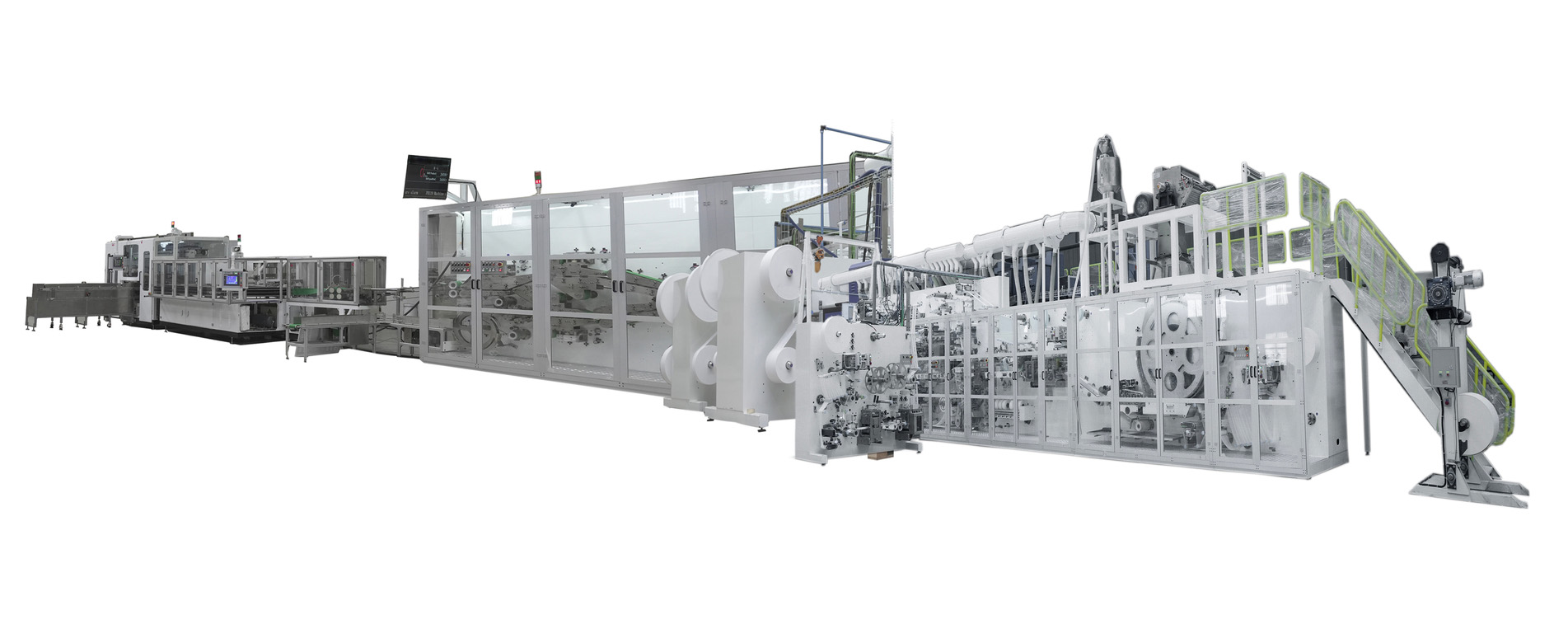
        As time goes by, the pace of global population aging is astonishingly rapid. The WHO estimates that by 2050, one out of every six people will be over 60 years old, which will lead to an explosive growth in the demand for adult incontinence products. This trend has directly driven the development of the adult diaper market, and subsequently brought about the demand for adult diaper production equipment.     The adult diaper market has been booming. For manufacturers, to meet this demand, they must expand their production scale, which requires investment in purchasing reliable production equipment. This creates a clear opportunity for investment in adult diaper production equipment. Unlike fluctuating consumer goods, these equipment serve a "demand-based" market - aging is irreversible, thus ensuring long-term stable market demand. Modern consumers place greater emphasis on efficiency and versatility: a high-speed adult diaper production line can handle multiple product specifications, which is far more valuable than outdated single-function equipment.     For manufacturers, this data clearly demonstrates its validity. The growth of the adult diaper market is not a short-term fluctuation but a structural transformation. Coupled with durable and high-performance adult diaper production equipment, this implies stable profits and the possibility of establishing a position in the industry.     In summary, the needs of the elderly population make the adult diaper market recession-resistant, while adult diaper production equipment is a project worth investing in. Choosing the right equipment, such as a fully servo automatic adult diaper production line, can transform changes in population structure into commercial success. Quanzhou First One Machinery Co., Ltd. will provide you with professional guidance and services. Please contact us to seize the market share ASAP!

leave a message

leave a message
For any request of information or technical support, fill in the form. All fields marked with an asterisk* are required.
Submit
Contact us :
+86 -15859535393

Home

Products

WhatsApp

contact