other
  • Choose the Right High-Speed Line for Your Hygiene Products: Baby Diaper, Adult Diaper, Sanitary Napkin & Pet Pad
    Choose the Right High-Speed Line for Your Hygiene Products: Baby Diaper, Adult Diaper, Sanitary Napkin & Pet Pad Jan 01, 2026
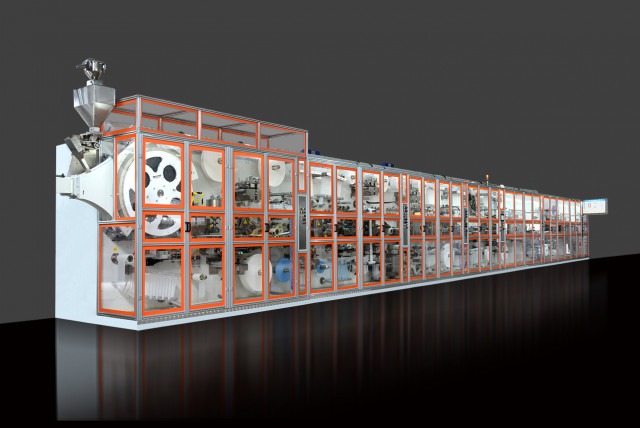
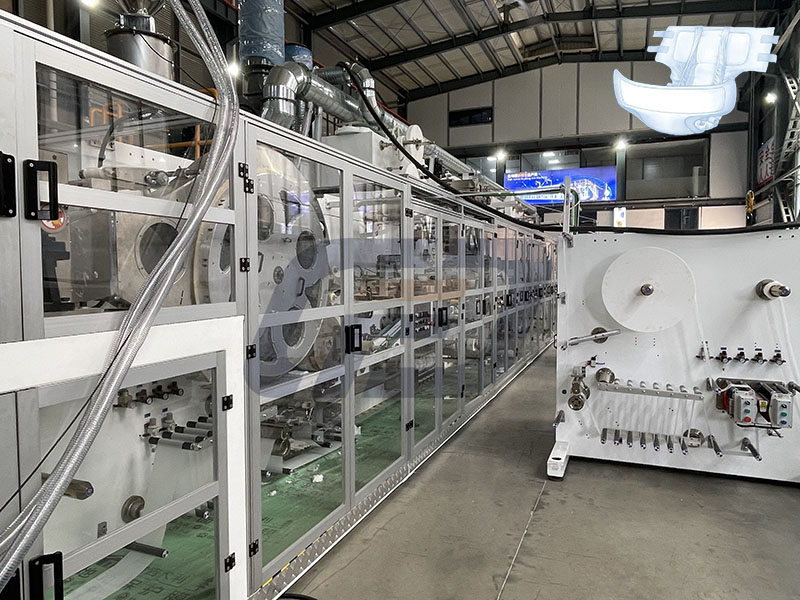
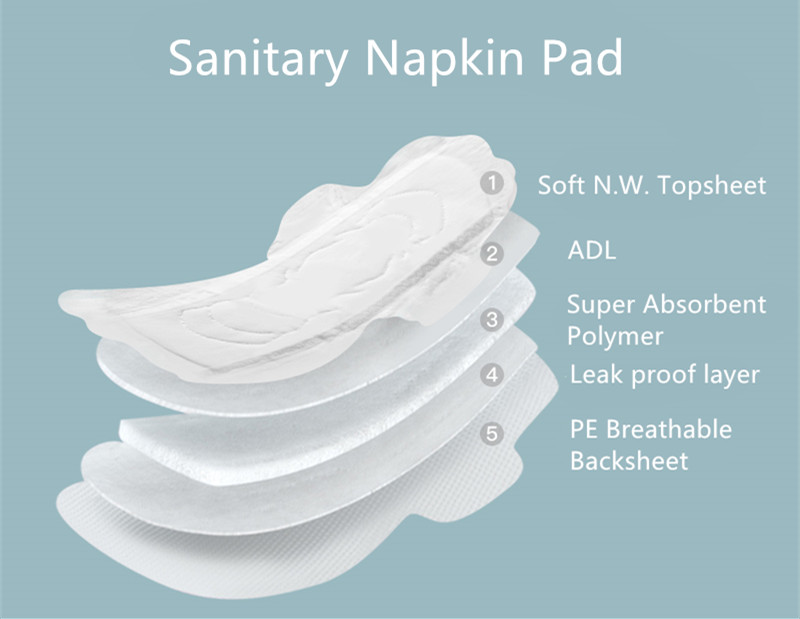
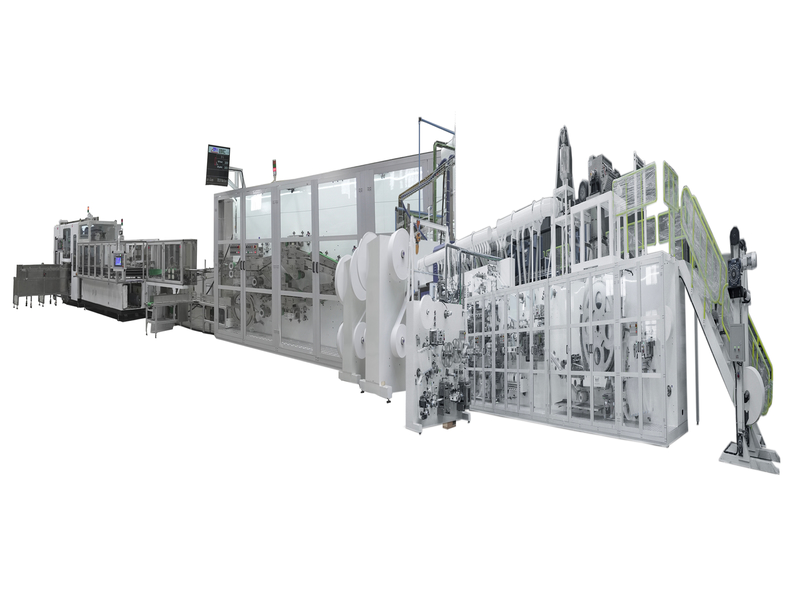
    If you’re planning to set up or upgrade a hygiene product factory, one critical decision stands out: which high-speed production line to choose for baby diapers, pull-ups, adult care products, sanitary napkins, or pet pads. The right line speed, quality, flexibility, and cost. Below is a practical guide based on real-world industry experience.   1. Baby Diaper & Baby Pull-Up Lines: Prioritize Softness + Speed Best for : Newborn to toddler diapers, training pants, pull-ups. Recommended speed: · Baby diaper line speed: 600–700 ppm · Baby pull-up line speed: 500–600 ppm  · Key features: · Full servo drive + auto tension control  · Ultrasonic welding (softer waist/leg cuffs)  · SAP precision dosing (no leakage, consistent absorbency) · AI vision inspection (defect detection + auto reject) · Ideal output: About 1,008,000 pcs / month.   2. Adult Diaper & Adult Pull-Up Lines: Prioritize Absorbency + Comfort Best for : Adult diapers, incontinence briefs, Adult pull-ups. Recommended speed : · Adult diaper line speed : 250–320 ppm · Adult pull-up line speed : 280–300 ppm · Key features: · Reinforced high-absorbency core  · Stretch waist + elastic leg cuffs  · Skin-friendly hot melt (low irritation)  · Low-noise, stable 24 / 7 operation  · Ideal output: About 460,800 PCS / month.    3. Sanitary Napkin Lines: Prioritize Ultra-High Speed + Precision Best for : Sanitary napkins, period panties.  Sanitary napkins line speed: 800–1,000 ppm Period panties line speed: 300 ppm Key features:  · Multi-layer lamination (topsheet → core → backsheet)  · PID-controlled hot melt (±1°C accuracy)  · 360° visual inspection (99.97% defect detection)  · Quick size change (15 min for day/night/heavy flow)  · Ideal output: About 1,440,000 PCS / month.    4. Pet Pad & Underpad Lines: Prioritize Width + Absorbency Best for : Pet training pads, disposable underpads. Recommended speed: 250–700 ppm Key features: · Wide-format handling (600–800mm)  · 5-layer structure (nonwoven + tissue + fluff pulp + SAP + PE)  · Web guider (Deviation range ±0.5mm)  · Ideal output: About 1,008,000 PCS /month.   5. Universal Must-Haves for All Lines Regardless of product type, insist on: · Full servo system: Stable speed, low waste (<3%) · PLC + HMI: Easy operation, recipe storage · Safety standards: CE/ISO compliant, safety guards, emergency stops · After-sales: 24/7 technical support, spare parts availability Final Tip: Match Line Speed to Your Market · Small/medium market: 300–500 ppm lines (flexible, lower investment) · Large/export market: 600–1,000 ppm lines (high volume, lower unit cost)  
  • Adult Diaper Production Lines: A Comprehensive Guide for Manufacturers (2026) Apr 29, 2026
    The global adult diaper market is experiencing unprecedented growth, driven by aging populations worldwide and increasing awareness of incontinence management. Valued at approximately $25 billion in 2025, the market is projected to exceed $40 billion by 2032. For hygiene product manufacturers, this represents a significant expansion opportunity that demands careful production line selection.   Unlike baby diaper manufacturing, adult diaper production presents unique engineering challenges — larger product dimensions, higher absorbency requirements, and different elastic configurations. This guide provides a detailed technical and commercial overview of heavy-duty adult diaper production line for serious manufacturers.   Understanding the Adult Diaper Market Opportunity   The demographic tailwind is clear. By 2030, over 1.4 billion people worldwide will be aged 60 or older. China alone has over 260 million people aged 60+, with adult diaper penetration rates still below 10% in many developing markets (compared to 50–60% in Japan and Western Europe).   This gap drives growing demand for adult diaper manufacturing equipment capable of producing both pull-up pants-style and tape-style adult diapers at industrial scale.   Key market segments:   Pull-up adult diapers (pants style): Fastest-growing segment, preferred by active users Tape-style adult diapers: Traditional open-style, common in hospital and care facility settings Underpads and briefs: Supplementary products for the institutional market   Technical Specifications of an Industrial Adult Diaper Line   A heavy-duty adult diaper production line differs fundamentally from baby diaper lines in several critical aspects. Here is a direct comparison:   Specification Baby Diaper Line Adult Diaper Line Product Size 300–450 mm length 500–900 mm length SAP Dosing Capacity 8–15 g/diaper 15–40 g/diaper Pulp Consumption 10–20 g/diaper 30–60 g/diaper Line Speed (stable) 400–600 ppm 80–200 ppm Leg Elastic Range 3–6 strands 6–12 strands Waist Elastic Type Front waist only 360° full waistband Core Forming Method Airlaid or web-wheel Multi-layer web-wheel Machine Weight 60–80 tons 70–100 tons   Table: Key technical differences between baby diaper and adult diaper production lines.   Key Engineering Considerations for Adult Diaper Lines   1. Larger Core Forming System   Adult diapers require 2–4× the absorbent core volume of baby diapers. This demands:   High-capacity pulp mills: Processing capacity of 500–1,200 kg/hour Precision SAP dosing units: Capable of 15–40 g per diaper with ±1% accuracy Multi-layer core forming: Advanced lines produce zoned cores with differentiated density for optimal liquid distribution   2. Heavy-Duty Elastic Application   Adult diaper users require superior fit and leak protection. Modern lines apply:   Leg elastics: 6–12 strands per side with independent tension control 360° waistband elastics: Full-wrap elastic application for pull-up styles Strand spacing accuracy: ±1 mm for consistent gather performance   3. Product Changeover Flexibility   A competitive adult diaper making machine must support rapid changeover between:   Pull-up (pants) and tape-style adult diapers Multiple sizes (M, L, XL, XXL) Different leg cut designs and waist heights   Full-servo-driven changeover can reduce size-switching time from 4 hours (mechanical) down to 20–40 minutes.   4. Packaging System Adaptation   Adult diapers are bulkier than baby diapers. The packaging station must handle:   Larger folded dimensions (compression folding) Lower count per bag (10–30 pieces vs 40–100 for baby) Compression packaging to reduce logistics cost   Full-Servo Technology: The Modern Standard   Just as in baby diaper production, full-servo drive architecture has become the gold standard for adult diaper production lines. Compared to traditional mechanical drives, full-servo systems offer:   Programmable speed profiles: No mechanical gear changes Higher precision: ±0.05 mm positioning accuracy vs ±0.5 mm for mechanical Reduced waste: Material waste drops from 4–5% to 0.5–1.5% Lower maintenance: Servo motors are virtually maintenance-free compared to clutches, belts, and mechanical transmissions Energy savings: 15–25% lower power consumption at equivalent output   For a full servo adult diaper machine, these advantages translate directly into higher product quality and better profit margins.   Cost Analysis and ROI   Investment Range by Line Type:   Line Type Investment Range Monthly Output (single shift) ROI Period Entry-Level Mechanical $400,000 – $1200,000 1–2 million pcs 18–30 months Mid-Range Semi-Servo 3–5 million pcs 12–18 months Heavy-Duty Full Servo 5–8 million pcs 8–14 months   Table: Investment, output and ROI comparison across adult diaper line tiers.   The higher upfront cost of a full-servo heavy-duty line is offset by:   2–3× higher production volume 60–70% lower per-unit equipment cost Material savings of $200,000–$500,000/year from reduced waste 15–20 year machine life vs 5–8 years for entry-level   Choosing an Adult Diaper Making Machine Supplier   When selecting a manufacturer for your adult diaper production line, evaluate these factors:   Dual-mode capability: Can the same line produce both pull-up and tape-style adult diapers? Servo technology depth: Is the entire line full-servo or only partially servo-driven? SAP handling precision: How accurate is the SAP dosing system at 15–40 g range? Global service network: Can the supplier provide installation and training in your country? Spare parts availability: What is the lead time for critical spare parts? Speed-to-market: How quickly can a custom-configured line be delivered and commissioned?   Conclusion   The adult diaper market offers one of the strongest growth opportunities in the hygiene product manufacturing sector today. As global demographics shift and developing markets increase penetration rates, demand for high-quality adult diapers will continue to rise.   Investing in a properly specified adult diaper production line — particularly a full-servo heavy-duty system — positions manufacturers to capture this growing market with superior product quality, lower per-unit costs, and long-term operational reliability.   For a detailed capacity analysis and equipment quotation tailored to your production requirements, contact our engineering team at First One Machine.
  • Are Baby Diaper Production Lines Worth the Investment in 2026? Apr 28, 2026
    The global baby diaper market continues its steady expansion, valued at over $85 billion in 2026 and projected to exceed $120 billion by 2032. For manufacturers looking to enter or scale in this space, the production line you choose is not just a machine purchase — it is a long-term capital investment that defines your production capacity, product quality, and ultimately your profitability. Unlike small-scale tabletop machines or entry-level lines, heavy-duty industrial baby diaper production lines represent a completely different class of equipment. These are full-scale manufacturing systems designed for sustained high-volume output, precision engineering, and decades of service life. With price tags ranging from $200,000 to $850,000+, they demand careful evaluation before commitment. This guide provides a comprehensive technical and commercial overview of baby diaper production lines, covering core technologies, key specification comparisons, cost analysis, and ROI considerations for serious manufacturers. What Defines a Heavy-Duty Baby Diaper Production Line? A full-scale baby diaper production line is an integrated manufacturing system that combines multiple process stations into a single synchronized production flow. From raw material unwinding to finished product packaging, every stage is automated and controlled. The critical distinction between a light-industrial machine and a heavy-duty production line comes down to three factors: 1. Production Speed & StabilityA heavy-duty line operates at sustained speeds of 400–600 diapers per minute (design speeds up to 1,200 ppm), running 24/7 with minimal downtime. Entry-level machines rarely exceed 150–200 ppm and cannot maintain continuous operation without frequent maintenance stops. 2. Full Servo-Driven ArchitectureModern high-end lines employ full servo motor control across all critical axes — unwinding, pulp forming, SAP dosing, elastic application, cutting, folding, and stacking. This eliminates mechanical transmission chains, reduces wear parts by 60%+, and delivers micron-level precision that mechanical cam-driven systems cannot match. 3. Industrial Build QualityHeavy-duty lines weigh 60–80 tons, with cast-iron frames, industrial-grade bearings, and PLC-controlled servo drives rated for continuous industrial operation. These are factory-floor anchors, not benchtop machines — a true heavy duty diaper manufacturing equipment designed for decades of productive service. Core Technology Breakdown Servo Motor System The heart of any modern diaper line is its servo drive system. Unlike traditional mechanical drives that rely on gears, belts, and clutches, full-servo systems provide: Specification Traditional Mechanical Drive Full Servo Drive Positioning Accuracy ±0.5 mm ±0.05 mm Speed Range Fixed ratios, manual adjustment 0–100% programmable Changeover Time 2–4 hours 15–30 minutes Maintenance Interval Every 500 hours Every 3,000 hours Energy Efficiency 60–70% 85–92% Waste Rate 3–5% 0.5–1.5% Noise Level 85–95 dB 70–78 dB Spare Parts Cost High (mechanical wear) Low (fewer moving parts) Table: Performance comparison between traditional mechanical and full-servo drive systems for diaper production. Key Process Stations A complete baby diaper production line typically includes these stations: 1. Raw Material Unwinding — Multiple servo-controlled unwinders manage topsheet, backsheet, acquisition layer, leg cuffs, elastics, tapes, and SAP materials simultaneously. Automatic tension control and zero-speed splicing ensure continuous operation without stops. 2. Core Forming System — High-speed pulp mills (teeth-type crushers) process fluff pulp at up to 600 kg/hour, combined with precision SAP dosing. Web-wheel molding creates uniform core shapes with controlled density distribution. 3. Elastic Application — Servo-driven elastic placement systems apply leg and waist elastics with programmable tension and spacing. This directly impacts fit quality and leak protection. 4. Shaping & Embossing — Vacuum forming drums shape the diaper chassis. Optional embossing modules add brand-specific patterns and acquisition channels. 5. Folding & Packaging — High-speed folding units (tri-fold, double-fold) operate at line speed without accumulation. Automated stacking and packaging complete the production line. Commercial & Production Specifications When evaluating a heavy-duty baby diaper line, here are the critical commercial parameters to review: Parameter Entry-Level Line Heavy-Duty Industrial Line Investment Range $160,000 – $800,000 Max Design Speed 200–300 ppm 600–1,200 ppm Stable Operating Speed 120–180 ppm 400–600 ppm Product Size Range 1–2 sizes S, M, L, XL (customizable) Qualified Rate 92–95% ≥98% Power Consumption 120–180 KW 250–400 KW Machine Weight 15–25 tons 60–80 tons Footprint 20m × 5m 30m × 9m Service Life 5–8 years 15–20 years ROI Period 18–24 months 8–14 months Table: Commercial comparison between entry-level and heavy-duty industrial baby diaper production lines. ROI Analysis: Why Heavy-Duty Wins At first glance, a $500,000+ production line appears daunting compared to a $100,000 entry-level machine. However, the per-unit economics tell a different story. Production Volume Advantage A heavy-duty line producing 400 diapers per minute at 90% OEE generates approximately 17 million diapers per month (single-shift basis). An entry-level line at 150 ppm produces roughly 6 million — a 3× output gap. Per-Unit Cost Reduction The capital cost per diaper produced drops dramatically at scale. A $500,000 line depreciated over 15 years at 400 ppm yields a per-diaper equipment cost of approximately $0.0008, compared to $0.003 for a $100,000 entry-level line over 8 years at 150 ppm. Material Efficiency Full-servo control reduces material waste from 3–5% down to 0.5–1.5%. For a facility producing 200 million diapers annually, this represents material savings of $400,000–$800,000 per year in SAP, pulp, and nonwoven materials alone. Choosing the Right Supplier Not all heavy-duty line manufacturers are equal. When evaluating suppliers, consider: Servo technology maturity — Has the supplier delivered full-servo lines for 5+ years? Global service capability — Can they provide on-site installation, training, and spare parts support in your region? Customization flexibility — Can the line be configured for specific diaper styles (tape, pant) and custom sizes? Industry 4.0 readiness — Does the line support OEE tracking, remote monitoring, and IoT data integration? Reference installations — Request factory visit or video walkthrough of a running line at the same capacity tier. Final Thoughts Investing in a heavy-duty baby diaper production line is a strategic decision that goes far beyond machine specifications. It is a bet on market growth, production efficiency, and long-term competitiveness. For manufacturers targeting serious scale — 50 million+ diapers per year — the heavy-duty full-servo line is not an expense; it is a profit center. The lower per-unit cost, higher output quality, and longer service life create a durable competitive advantage that entry-level equipment simply cannot match. If you are evaluating a new production line investment, contact our engineering team for a detailed capacity analysis and equipment proposal tailored to your production requirements.
  • Is it worth investing in an adult diaper production line?
    Is it worth investing in an adult diaper production line? Jan 01, 2025
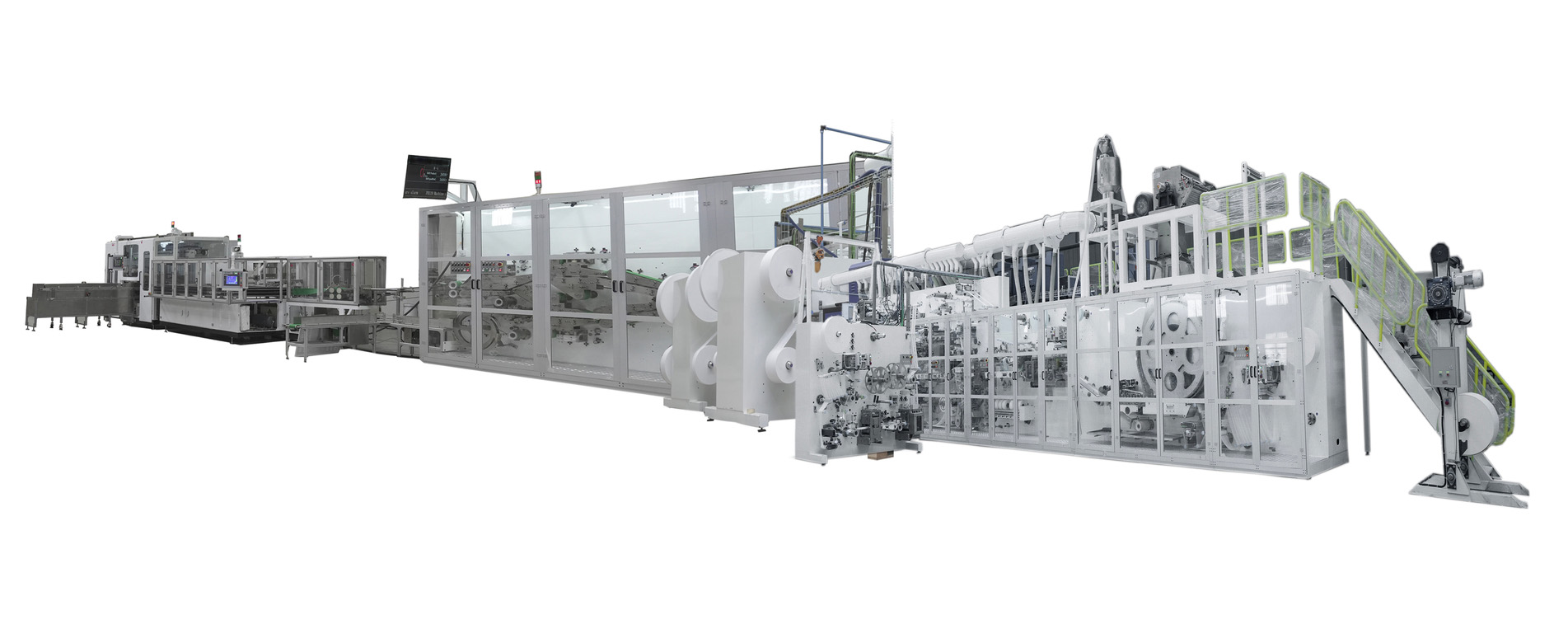
        As time goes by, the pace of global population aging is astonishingly rapid. The WHO estimates that by 2050, one out of every six people will be over 60 years old, which will lead to an explosive growth in the demand for adult incontinence products. This trend has directly driven the development of the adult diaper market, and subsequently brought about the demand for adult diaper production equipment.     The adult diaper market has been booming. For manufacturers, to meet this demand, they must expand their production scale, which requires investment in purchasing reliable production equipment. This creates a clear opportunity for investment in adult diaper production equipment. Unlike fluctuating consumer goods, these equipment serve a "demand-based" market - aging is irreversible, thus ensuring long-term stable market demand. Modern consumers place greater emphasis on efficiency and versatility: a high-speed adult diaper production line can handle multiple product specifications, which is far more valuable than outdated single-function equipment.     For manufacturers, this data clearly demonstrates its validity. The growth of the adult diaper market is not a short-term fluctuation but a structural transformation. Coupled with durable and high-performance adult diaper production equipment, this implies stable profits and the possibility of establishing a position in the industry.     In summary, the needs of the elderly population make the adult diaper market recession-resistant, while adult diaper production equipment is a project worth investing in. Choosing the right equipment, such as a fully servo automatic adult diaper production line, can transform changes in population structure into commercial success. Quanzhou First One Machinery Co., Ltd. will provide you with professional guidance and services. Please contact us to seize the market share ASAP!
  • What are the differences between ultra-thin sanitary pads and regular sanitary pads?
    What are the differences between ultra-thin sanitary pads and regular sanitary pads? Mar 21, 2023
    The main difference between ultra-thin sanitary napkins and regular ones lies in the absorbent material of the core. Ultra-thin sanitary napkins:The core is made of absorbent paper. Regular sanitary napkins: The core is made of wood pulp, SAP and tissue paper.      
  • What are the differences between T-shape diapers and I-shape diapers?
    What are the differences between T-shape diapers and I-shape diapers? Jan 26, 2024
    T-shape Diapers  Refers to the flat shape of the disposable diaper when unfolded, resembling the letter "T". It has "small wings" with adhesive strips, which need to be unfolded, adhered, and fixed onto the baby's abdomen.   I-shape Diapers  Refers to a type of diaper whose overall structure resembles the letter "I", being a complete waist pant without separate attached wings. Its waist is a 360-degree wrap-around elastic waistband. If you want to know more about disposable diapers, please feel free to contact us at any time.
  • How to Start a Business with a Baby Diaper Machine
    How to Start a Business with a Baby Diaper Machine Dec 10, 2024
    The global demand for diapers—from baby to adult variants keeps rising, making a diaper manufacturing business a lucrative venture. If you’re ready to start diaper factory, the right production machine is your most critical investment. Here’s a step-by-step guide to launch successfully.   First, conduct market research. Identify your target audience (e.g., parents, healthcare facilities for adult diapers) and local regulations. This shapes your product range and ensures compliance, laying the groundwork for your diaper manufacturing business.At the same time, the specifications, models and grades of the products to be produced must be determined.   Next, choose a high-performance diaper production machine. Look for models with PLC control—this feature enables precise, automated operations, reducing human error and boosting efficiency. Full servo motors are another must: they deliver consistent speed and torque, ensuring uniform diaper quality even during long production runs. Modular design is also key; it lets you adapt the machine to make different diaper size without major overhauls, saving time and money as your business grows. These features directly address the core needs of anyone looking to start diaper factory.   Then, secure a suitable facility. Ensure it has enough space for the diaper manufacturing machine, raw material storage (like non-woven fabric, absorbent cores), and finished goods. Good ventilation and easy access for logistics will streamline operations.   Finally, test and launch. Run trial productions with your machine to fine-tune settings, then start small-scale sales. Leverage the machine’s fast production speed to meet early demand and scale up gradually.   Starting a diaper manufacturing business doesn’t have to be overwhelming. With the right PLC-controlled, full-servo, modular machine, you can set up a efficient, flexible operation that stands out. Ready to start diaper factory? Invest in equipment that grows with your business—and turn your vision into profit.
1 2 3

A total of 3 pages

leave a message

leave a message
For any request of information or technical support, fill in the form. All fields marked with an asterisk* are required.
Submit
Contact us :
+86 -15859535393

Home

Products

WhatsApp

contact