other
  • How to Choose an Adult Diaper Production Line: Key Considerations for Manufacturers May 11, 2026
    The global adult diaper market is experiencing unprecedented growth, driven by aging populations, rising incontinence awareness, and improving healthcare infrastructure in developing countries. For hygiene product manufacturers looking to expand their product portfolio or enter this lucrative segment, selecting the right adult diaper production line is a critical decision that directly impacts profitability, product quality, and long-term competitiveness.Unlike baby diapers, adult diapers come in multiple formats — tape-style (briefs), pull-up pants, and pad inserts — each requiring different machine configurations. A versatile adult diaper production line should offer quick changeover between styles, allowing manufacturers to adapt to market demand without investing in multiple dedicated lines. Key Technical Specifications to Evaluate When comparing adult diaper machines, pay close attention to these critical parameters: Parameter Entry-Level Mid-Range High-End Design Speed 150-200 pcs/min 250-350 pcs/min 400-600 pcs/min Servo Control Partial servo Full servo (8-12 axes) Full servo (16+ axes) Product Range 1-2 sizes 3-5 sizes 5-8+ sizes Material Waste 5-8% 3-5% 1-3% Changeover Time 60-90 min 30-60 min 15-30 min Price Range $400,000 – $1200,000 Sap Absorption Core — The Heart of Quality The SAP (super absorbent polymer) application system determines your product's core performance — absorption speed, retention capacity, and leak prevention. Look for machines with precision SAP dosing (±0.5g accuracy) and multi-layer core forming capability. High-end machines offer ADL (acquisition distribution layer) integration, which significantly improves liquid distribution and dry-back performance — a key differentiator in premium adult diaper products. Elastic Waistband and Leg Cuff Technology Adult users require superior fit and leakage protection. A quality elastic waistband system and multi-strand leg cuff application are non-negotiable. The adult diaper making machine should feature independent servo-driven elastic application, allowing precise tension control for different body sizes and ensuring consistent product quality at high running speeds. Automation and Data Integration Modern manufacturing demands smart factory capabilities. Prioritize machines with PLC-based control systems, HMI touch interfaces, and optional MES/ERP integration. Real-time production monitoring, defect detection (metal, weight, vision inspection), and automatic rejection systems reduce labor costs and improve yield. Full-servo drive technology also enables energy savings of 15-25% compared to traditional mechanical drive systems. After-Sales Support Matters Most The best machine is worthless without reliable technical support. Choose a supplier that offers on-site installation and commissioning, operator training, remote diagnostics, and a readily available spare parts inventory. Manufacturers like First One Machine provide comprehensive turnkey services including site planning, installation guidance, engineer dispatch, and ongoing technical support to ensure your production line operates at peak efficiency.The adult diaper market is projected to exceed $30 billion by 2030. Manufacturers who invest in the right production technology today will be best positioned to capture this growing demand. Evaluate your target market, budget, and long-term production goals carefully before making your equipment decision.
  • Why Investing in an Adult Diaper Production Line Is a Smart Move for 2026 and Beyond May 10, 2026
    The global demand for adult diapers is accelerating at an unprecedented pace. With aging populations in developed nations and growing awareness of hygiene products in emerging markets, manufacturers who move early into adult diaper production stand to capture a rapidly expanding segment. Unlike baby diapers, which follow birth rate trends, adult diaper demand is driven by demographic tailwinds that are far more predictable — and long-lasting. For hygiene product manufacturers looking to diversify or scale up, adding an adult diaper production line is not just an option; it is becoming a strategic necessity. One of the key advantages of modern adult diaper machines is their ability to handle a wide range of product specifications — from different sizes and absorbency levels to various tape and pant-style formats. A full-servo adult diaper machine offers precise control over every stage of production, from pulp and SAP dosing to elastic waistband application and final packaging. This flexibility allows manufacturers to serve multiple market segments — healthcare institutions, retail consumers, and institutional buyers — all from a single production line, maximizing both utilization and return on investment. Quality and speed are the twin pillars of a successful diaper manufacturing operation. A well-engineered production line can run at speeds of 300 to 600 pieces per minute while maintaining strict quality standards. Features like automatic reject systems, real-time weight monitoring, and servo-driven tension control ensure that every diaper meets specifications. When evaluating suppliers, look for manufacturers that offer comprehensive training, remote troubleshooting, and readily available spare parts. These factors directly affect uptime and total cost of ownership. A reliable adult diaper making machine partner can make the difference between a smooth production ramp-up and costly delays. The financial case for adult diaper manufacturing is compelling. Market analysts project the global adult diaper market to exceed USD 25 billion by 2030, growing at a CAGR of over 7%. Raw material costs are comparable to baby diaper production, but adult diapers often command higher per-unit margins due to specialized features like odor control, higher absorbency, and skin-friendly materials. Additionally, government healthcare procurement programs in many countries provide a stable, recurring demand channel that insulates manufacturers from retail market volatility. For factories already producing baby diapers, adding an adult diaper line can leverage existing infrastructure — the same facility, utilities, and even some raw material suppliers — dramatically lowering the barrier to entry. Beyond the numbers, there is a social dimension that forward-thinking manufacturers should recognize. Improved geriatric care standards and destigmatization of incontinence products are driving adoption rates higher each year. By entering this market, manufacturers are not only building a profitable business line but also contributing to better quality of life for millions of elderly and disabled individuals. In many developing regions, local production of adult diapers is still scarce, creating a first-mover advantage for those who establish capacity now. The technology, market demand, and social need are all aligned — the only question is timing. If you are evaluating new production lines or expanding your hygiene product portfolio, now is the time to seriously consider adult diaper manufacturing. The demographic trends are clear, the technology is mature, and the market is hungry for reliable suppliers. Investing in a high-quality adult diaper production line today positions your factory for sustained growth through the next decade and beyond.
  • Sanitary Napkin Production Lines: Complete Technology & Investment Guide for Manufacturers (2026) May 09, 2026
    The global sanitary napkin market is valued at over $30 billion and continues to grow steadily, driven by rising female hygiene awareness, increasing disposable incomes in developing countries, and expanding product offerings such as ultra-thin, organic, and overnight variants. For hygiene product manufacturers, a well-configured sanitary napkin production line represents one of the most accessible entry points into the feminine hygiene manufacturing sector — with relatively lower capital requirements compared to baby or adult diaper lines and a broad, stable consumer base. This guide provides a comprehensive overview of sanitary napkin production line technology, key specification comparisons, cost analysis, and investment considerations for serious manufacturers. The Sanitary Napkin Market Opportunity Unlike the baby diaper market which is concentrated in the first few years of life, the sanitary napkin market addresses approximately 1.8 billion menstruating women globally, each requiring products every month. This creates a predictable, recurring demand cycle that is highly resistant to economic downturns. Key market segments include: Ultra-thin sanitary napkins: The fastest-growing segment, preferred by younger consumers for discretion and comfort Regular/maxi pads: The traditional workhorse, still dominant in many developing markets Pantyliners: Light protection for daily use, typically 20–25% of market volume Overnight/long pads: Premium segment with higher absorbency requirements Emerging markets in Asia, Africa, and Latin America present the strongest growth opportunities, with sanitary pad penetration rates still below 40% in many rural areas. Government initiatives promoting menstrual hygiene in countries like India, Kenya, and Nigeria are further driving market expansion. Sanitary Napkin Production Line: Key Specifications A modern sanitary napkin production line is a complex, multi-station automated system that transforms roll-stock raw materials into finished, packaged products. The table below compares the main configuration levels available in the market today. Parameter Entry-Level Line Mid-Range Line High-Speed Full-Servo Line Design Speed 200–400 pcs/min 600–800 pcs/min 1,000–1,200 pcs/min Investment Range (USD) $160,000 to $700,000 Drive System Mechanical + partial servo Full-servo main drive Full-servo multi-axis Product Types Regular only Regular, ultra-thin, maxi All types incl. overnight, pantyliners Changeover Time 2–4 hours 45–90 minutes 15–30 minutes Material Waste Rate 4–6% 2–3% 0.8–1.5% Monthly Output (single shift) 3–6 million pcs 8–12 million pcs 15–20 million pcs Operators Required 5–7 3–4 2–3 Machine Dimensions 20m × 4m 28m × 6m 35m × 7m Core Technology Breakdown 1. Raw Material Unwinding and Handling A sanitary napkin line typically handles 6–10 different raw material rolls simultaneously. These include: Topsheet — Non-woven fabric (thermal bond or spunbond) for fluid acquisition Acquisition distribution layer (ADL) — Helps move fluid into the core Absorbent core — Airlaid pulp + SAP (super absorbent polymer) Backsheet — Breathable PE film to prevent leakage Release paper — For the adhesive wings and main adhesive strip Packaging film — Individual wrap or flow wrap material Servo-driven unwinders with automatic tension control are essential for maintaining consistent web tension across all materials. Zero-speed splicing systems allow roll changes without stopping the line. 2. Core Forming Technology The absorbent core is the heart of any sanitary napkin. Modern lines use two primary core-forming methods: Airlaid Core Forming: Fluff pulp fibers are defibrated and mixed with SAP powder using a vacuum forming drum. The fiber-to-SAP ratio is precisely controlled for optimal absorption characteristics. This method produces soft, bulky cores ideal for premium ultra-thin pads. Web-Wheel Core Forming: Pre-formed pulp webs are unwound, cut, and laminated with SAP applied between layers. This method is faster and more suitable for high-speed lines producing standard pads. High-end machines also offer zoned core forming — creating cores with differentiated density zones. Higher density in the center for fluid distribution and lower density at the edges for comfort. 3. SAP Dosing Precision SAP is the most expensive material in a sanitary napkin, typically accounting for 15–25% of raw material cost. Precision dosing is critical for both product performance and cost control. Modern lines achieve SAP dosing accuracy of ±1.5% using gravimetric feeding systems combined with servo-driven applicators. Typical SAP content per pad type: Pantyliners: 0.05–0.15 g Regular pads: 0.3–0.6 g Ultra-thin pads: 0.4–0.8 g Overnight/maxi pads: 0.8–1.5 g 4. Hot Melt Adhesive Application Hot melt adhesive bonds the multiple layers of a sanitary napkin together. A sanitary napkin production line typically has 3–6 hot melt application points: topsheet-to-core, core-to-backsheet, wing adhesive, longitudinal seal, main adhesive strip, and end seals. Modern lines feature PID-controlled hot melt systems with ±1°C temperature accuracy, ensuring consistent adhesive viscosity and application weight even at 1,000+ pcs/min line speeds. Precise adhesive control directly reduces material waste and prevents contamination of the production environment. 5. Forming, Cutting, and Folding The shaping section converts the continuous laminated web into individual sanitary napkins with the correct contours. This includes: Embossing: Creates acquisition channels and brand-specific patterns on the topsheet Die cutting: Precision shaped cutting of the pad contour (hourglass, rectangular, or contoured shapes) Wing folding: For winged pads, the side wings are folded and sealed using hot melt Individual folding: Tri-fold or bi-fold options depending on packaging requirements Full-servo control of the cutting drum ensures synchronization with line speed, achieving cutting accuracy of ±0.3 mm even at maximum speed. 6. Packaging System The packaging section includes individual wrap, multi-pack bagging, and carton packing. For high-speed lines, this is often the bottleneck. Key features to look for: Individual flow wrap: Wraps each pad in film, running at line speeds Collation and stacking: Counts and stacks 8–20 pads per pack Bagging or cartoning: Final packaging for retail Case packing: Automatic case erection and sealing Some manufacturers choose to use separate, slower packaging equipment rather than integrating high-speed packaging into the main line. This reduces line complexity and improves overall uptime. ROI Analysis: Sanitary Napkin Production Line Let's run the numbers for a mid-range sanitary napkin production line at $350,000 investment: Assumptions: Production speed: 600 pcs/min Operating hours: 20 hours/day (two shifts), 25 days/month Efficiency rate: 85% Selling price per pad (wholesale): $0.08 Production cost per pad (material + labor + energy): $0.05 Gross profit per pad: $0.03 Monthly Output: 600 pcs/min × 60 min × 20 hrs × 25 days × 85% = 15,300,000 pads/month Monthly Gross Profit: 15,300,000 × $0.03 = $459,000/month Estimated Payback Period: $350,000 ÷ $459,000 ≈ less than 1 month (gross profit basis) Note: A more conservative calculation including overhead, installation, training, and first-year raw material buffer typically yields a 3–7 month payback period for mid-range full-servo lines. Entry-level mechanical lines typically take 10–18 months to break even. Full-Servo vs. Mechanical: Technology Comparison Factor Traditional Mechanical Line Full-Servo Line Initial Investment $160,000 to $700,000 Max Stable Speed 300–400 pcs/min 800–1,200 pcs/min Waste Rate 4–6% 0.8–1.5% Changeover Time 2–4 hours 15–30 minutes Product Range 1–2 sizes Full range (all sizes, styles) Machine Life 5–8 years 12–18 years Per-Unit Equipment Cost $0.0015 – $0.003 $0.0005 – $0.001 Key Considerations When Choosing a Supplier When evaluating sanitary napkin production line manufacturers, consider the following: Product flexibility: Can the line produce ultra-thin, regular, and overnight pads with quick changeover? Core forming options: Does the line support both airlaid and web-wheel core forming? SAP dosing accuracy: What is the dosing precision (±%) at full line speed? Hot melt system: Is the temperature control PID-based with ±1°C precision? Quality inspection: Does the line include inline vision inspection for defect detection? After-sales support: Installation, training, and spare parts availability in your region? CE/ISO certification: Are all safety standards met for your target market? Reference factories: Can you visit an operating line at the same capacity tier? Conclusion The sanitary napkin production line market offers attractive opportunities for both new entrants and established hygiene product manufacturers. With a relatively lower investment threshold compared to diaper lines and a stable, growing consumer base, feminine hygiene manufacturing can deliver excellent returns when equipped with the right technology. For manufacturers targeting growth in this segment, a mid-to-high-speed full-servo line provides the optimal balance of investment, output, and flexibility. The lower waste rate, faster changeovers, and longer machine life of full-servo lines create a clear competitive advantage that mechanical lines cannot match. Ready to discuss your sanitary napkin production line requirements? Contact First One Machine for a detailed capacity analysis, machine configuration recommendations, and a competitive quotation. Our engineering team has extensive experience installing feminine hygiene lines worldwide. First One Machine is a leading manufacturer of hygiene product machinery, specializing in full-servo baby diaper machines, adult diaper machines, and sanitary napkin production lines with 100+ installations globally.
  • Baby Diaper Production Line Costs: What to Expect When Starting Your Diaper Manufacturing Business May 08, 2026
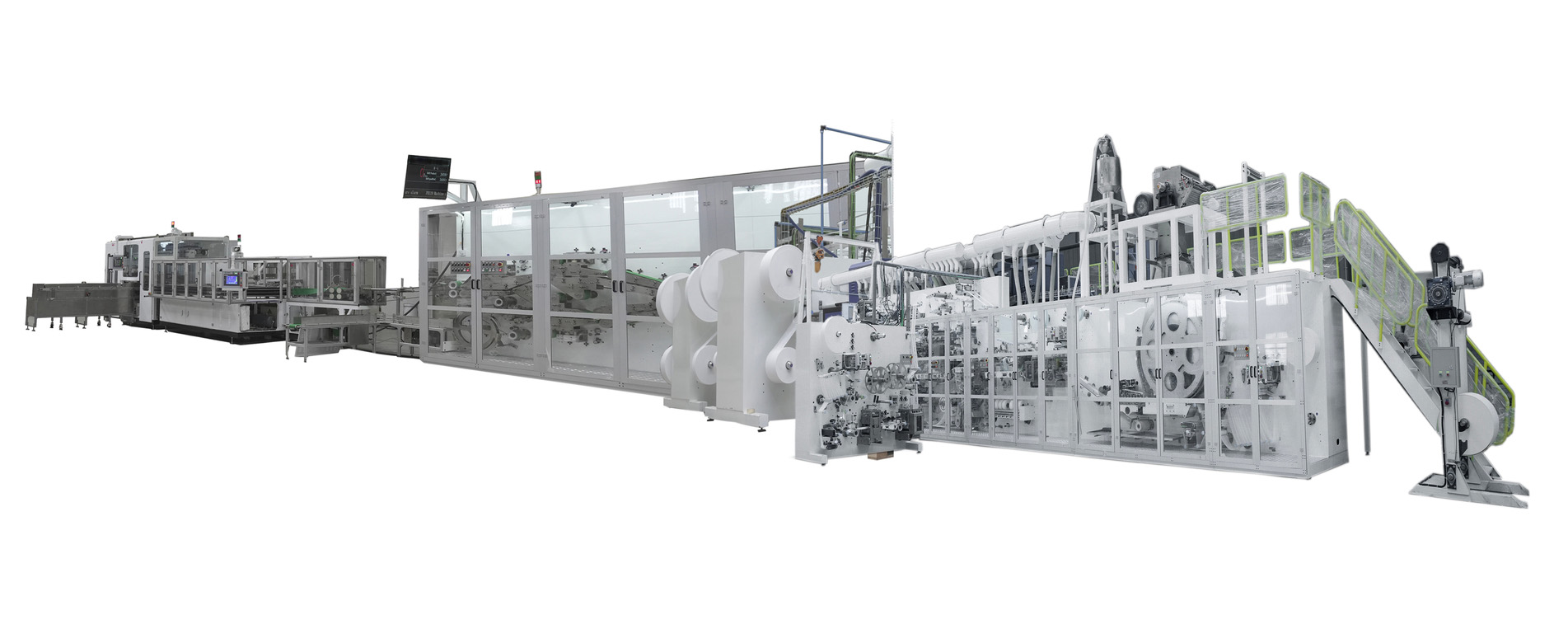
    Starting a baby diaper manufacturing business requires significant upfront planning — and the single biggest question every new factory owner asks is: how much does a baby diaper production line actually cost? The answer isn't a simple number, because the investment varies dramatically based on speed, automation level, brand reputation, and configuration. Understanding these cost drivers can save you tens of thousands of dollars and prevent costly mistakes. Let's break down the typical cost structure. Entry-level production lines (80–150 pieces per minute) for basic T-shape diapers start around $80,000–$120,000. These machines are suitable for small startups testing the market, but they come with higher labor requirements and lower output consistency. Mid-range lines (200–350 ppm) with servo-driven systems — the kind most serious manufacturers target — range from $180,000 to $350,000. They offer better energy efficiency, less material waste, and dramatically lower defect rates. High-speed fully automatic lines (400–600+ ppm) can exceed $500,000, but they deliver the lowest per-unit cost and are the only economical choice for large-scale production. Beyond the machine itself, you must budget for installation, training, and auxiliary equipment. A typical cost breakdown for a mid-range baby diaper making machine setup looks like this: Cost Item Estimated Range (USD) Notes Core Production Line $160,000 – $800,000 Main machine with servo motors, vacuum system Installation & Commissioning $8,000 – $15,000 Engineer travel, setup, calibration Operator Training (1–2 weeks) $3,000 – $6,000 On-site or factory training program Raw Material Handling System $10,000 – $25,000 SAP pulp mill, core forming unit Packaging Equipment $15,000 – $40,000 Counting, stacking, bagging line Spare Parts & Tooling Kit $5,000 – $12,000 First-year spare parts, changing parts Factory Preparation (electric, air) $10,000 – $30,000 Compressed air, power supply upgrades Total Estimated Investment $211,000 – $928,000   Now, let's talk return on investment. Assuming a mid-range 250 ppm line running two 8-hour shifts per day, 300 days a year, you can produce approximately 72 million diapers annually. At a conservative gross margin of $0.015–$0.025 per diaper, the annual gross profit ranges from $1.08 million to $1.8 million. This means a typical mid-range production line pays for itself within 4–8 months of full operation. Of course, these numbers depend heavily on your raw material costs, local labor rates, and selling price — but the math clearly favors automation. Another often-overlooked cost factor is maintenance. A quality baby diaper production line with full servo control and premium components will cost more upfront but typically delivers 10–15 years of reliable operation with annual maintenance spending of just 2–3% of the machine's value, compared to 5–8% for budget machines. Over a decade of operation, this difference alone can reach $100,000+ in cumulative savings. This is why many experienced factory owners choose a diaper production line cost that prioritizes quality and longevity over the lowest initial price. Finally, don't forget financing and import costs. If you're importing from a manufacturer overseas, factor in shipping ($3,000–$8,000), customs clearance (5–15% depending on your country), and potential import duties. Some suppliers offer financing options or phased payment terms — for example, 30% deposit, 60% before shipment, and 10% after installation — which can significantly ease the initial cash flow burden. Choosing the right diaper manufacturing investment partner who provides transparent pricing and after-sales support is just as important as the machine itself. Investing in a baby diaper production line is a major decision, but with proper budgeting and realistic ROI projections, it's one of the most profitable moves in the hygiene manufacturing industry today. If you'd like a detailed quotation tailored to your production targets and budget, contact us — we'll help you find the right configuration for your factory.
  • Key Features to Look for in a Sanitary Napkin Production Line May 07, 2026
    The sanitary napkin market is expanding rapidly across Asia, Africa, and Latin America, driven by rising awareness of menstrual hygiene and government health initiatives. For manufacturers looking to enter or scale in this space, investing in the right sanitary napkin production line is the single most important decision. Here are the key features you must evaluate before making your purchase. First, assess the automation level and servo control system. Modern sanitary napkin machinery relies on full-servo drive technology to achieve production speeds of 600–800 pieces per minute. A PLC-controlled servo system ensures precise synchronization between the absorbent core forming, embossing, wrapping, and packaging stations. This reduces material waste — particularly the expensive SAP (super absorbent polymer) and non-woven fabrics — and maintains consistent product quality across long production runs. Machines equipped with touch-screen HMI interfaces allow operators to adjust parameters on the fly, minimizing downtime during size or pattern changes. Second, examine the product versatility and changeover capability. A high-quality sanitary napkin manufacturing machine should support multiple product formats within the same production line: regular, ultra-thin, overnight, and panty-liner types. Quick-change modules for embossing patterns, wing folding configurations, and wrapper designs allow you to switch between SKUs in under 30 minutes. This flexibility is critical for contract manufacturers who serve multiple brands, each with unique specifications. Third, evaluate the material handling and waste reduction systems. Sanitary napkin production involves multiple layers — top sheet, transfer layer, absorbent core, back sheet, and release paper. Each layer must be fed, aligned, and bonded with precision. Look for lines with automatic unwinding stands, tension control systems, and edge-trim recycling units that can feed scrap back into the process. The best sanitary napkin production line achieves material utilization rates above 95%, directly improving your bottom line. Fourth, prioritize hygiene and cleanability. Sanitary napkins are medical-adjacent products; they must meet strict hygiene standards (ISO 9001, GMP). The machine should feature stainless steel contact surfaces, enclosed material paths to prevent contamination, and easy-access panels for daily cleaning. CIP (clean-in-place) systems are a major advantage, reducing cleaning downtime between production cycles. Fifth, consider the packaging integration. An inline packaging system — from individual wrap to multi-pack cartoning — eliminates the need for separate packaging lines and reduces labor costs. Modern sanitary napkin machinery integrates wrapping, sealing, and cartoning in a continuous flow, achieving packaging speeds that match the production rate. This streamlines the entire production-to-shipment process. Finally, don't overlook after-sales support. The best machine in the world is only as good as the service behind it. Choose a supplier that offers on-site installation, operator training, remote diagnostics, and a reliable spare parts inventory. With proper support, your sanitary napkin production line will deliver consistent output for 10–15 years, making it a long-term asset for your business. Feature Why It Matters Impact on ROI Full-Servo PLC Control Precise synchronization, low waste Reduces material cost by 8–12% Quick Changeover Modules Switch product types in <30 min Increases OEE by 15–20% Edge-Trim Recycling Reuses production scrap Improves utilization to >95% Inline Packaging System Wraps & cartons in one flow Cuts labor cost by 30–50% Hygiene-Grade Design Meets ISO 9001/GMP standards Enables medical market entry Investing in a sanitary napkin production line is a strategic decision that affects your product quality, operating costs, and market competitiveness. By focusing on servo automation, material efficiency, product versatility, hygiene design, and integrated packaging, you can build a production system that delivers strong returns for years to come.
  • Why Pull-Up Diaper Production Lines Are the Next Big Opportunity for Hygiene Product Manufacturers May 06, 2026
    The global pull-up diaper market has experienced remarkable growth over the past five years, driven by rising demand for toddler training pants and adult incontinence products that offer greater dignity and convenience. For hygiene product manufacturers looking to diversify their portfolio, investing in a dedicated pull-up diaper production line is no longer optional — it is a strategic necessity. Pull-up diapers differ fundamentally from traditional open-style diapers. They feature an elastic waistband that allows the product to be pulled on and off like regular underwear, providing a more comfortable fit and easier changing experience. This design requires specialized manufacturing equipment capable of handling elastic lamination, standing leg cuffs, and side-seam bonding with precision and speed. A modern pull-up diaper machine typically integrates several critical modules: a pulp fluff forming system, SAP (super absorbent polymer) dosing unit, elastic waistband applicator, leg elastic system, side-seam ultrasonic welding station, and a packaging unit. The key technological differentiator lies in the side-seam bonding process. Full-servo controlled machines now deliver seam strength consistency exceeding 98%, significantly reducing defect rates compared to older mechanical cam systems.   When evaluating pull-up diaper production lines, manufacturers should consider three core factors: line speed, material compatibility, and changeover flexibility. Entry-level lines operate at 150–200 pieces per minute, while high-end full-servo systems can reach 300–400 pieces per minute with automatic size-changeover capabilities. For mid-market producers targeting both toddler and adult segments, a flexible line that can handle waist sizes from 40 cm to 120 cm offers the best return on investment. The ability to switch between baby and adult diaper machinery configurations on the same platform can reduce capital expenditure by up to 40%. Feature Standard Pull-Up Line Full-Servo Pull-Up Line Max Speed 200 pcs/min 400 pcs/min Side-Seam Method Mechanical + Glue Ultrasonic Welding Size Changeover Manual (60–90 min) Automatic (10–15 min) Material Waste Rate 3–5% <1% Energy Consumption Higher (mechanical drive) Lower (servo motor drive)   The market outlook for pull-up diapers remains strong across both baby and adult segments. In the toddler category, more parents are choosing training pants over traditional diapers during potty training, creating steady demand growth of 6–8% annually in developing markets. In the adult segment, pull-up style products are rapidly replacing pad-type solutions as consumers seek more discreet, underwear-like options. This dual-market dynamic makes pull-up diaper making machine investments particularly resilient to market fluctuations. Quality control on a pull-up diaper production line requires attention to several critical parameters: waistband elasticity consistency, side-seam tensile strength (target >40N), absorbent core integrity, and leak-guard cuff performance. Modern production lines equipped with online vision inspection systems can detect and reject defects in real time, maintaining yield rates above 99.5%. Real-time data logging also enables predictive maintenance, reducing unplanned downtime by up to 30%.   As competition intensifies in the global hygiene products market, manufacturers who invest in advanced pull-up diaper production technology gain a decisive edge. The ability to produce high-quality pull-up diapers at competitive speeds with minimal waste directly impacts bottom-line profitability. For factories currently operating baby diaper or adult diaper lines, adding a pull-up diaper capability represents the most natural and profitable product line extension available today. Whether your target market is toddler training pants in Southeast Asia, adult incontinence products in Europe, or private-label brands in North America, the right pull-up hygiene product manufacturing line can unlock significant new revenue streams. First One Machine offers customized full-servo pull-up diaper production solutions designed to deliver maximum speed, reliability, and flexibility for manufacturers at any scale.
  • The Rise of Smart Sanitary Napkin Production Lines: Technology Trends and Market Opportunities May 05, 2026
    The global feminine hygiene market continues to expand, with sanitary napkin demand growing steadily across developing regions in Asia, Africa, and Latin America. For manufacturers looking to enter or scale up in this space, investing in a modern, fully automatic sanitary napkin production line is no longer just an option—it is a strategic necessity. This article explores the key technology trends shaping sanitary napkin manufacturing and the market opportunities that come with them.   Why Sanitary Napkin Manufacturing Is a Growing Opportunity According to industry reports, the global feminine hygiene products market is projected to reach USD 50 billion by 2030, growing at a CAGR of around 5–6%. Urbanization, rising awareness of menstrual health, and improving disposable income in developing countries are driving this growth. For machinery buyers—especially those in emerging markets—setting up a sanitary napkin production line offers a relatively fast path to capturing local demand while building a brand in the hygiene products space.   Unlike baby diapers or adult incontinence products, sanitary napkins require specific production technologies to ensure softness, absorption, leak protection, and comfort. This specialization creates a niche where the right machinery makes all the difference.   Key Technology Trends in Sanitary Napkin Production Lines 1. Full Servo Control Systems Modern sanitary napkin lines are shifting from mechanical cam systems to full servo-driven platforms. A full servo sanitary napkin making machine offers precise control over every production stage—from pulp grinding and forming to embossing and packaging. The benefits include faster changeover times between product sizes, reduced material waste, and higher overall equipment effectiveness (OEE). For factory owners, this translates directly into lower per-unit costs and greater production flexibility.   2. Multi-Layer Material Handling Today's premium sanitary napkins consist of multiple layers: a top sheet, an acquisition distribution layer, an absorbent core (often SAP + fluff pulp), a back sheet, and release paper. Advanced production lines integrate automated unwinding, splicing, and tension control for each layer, minimizing downtime and ensuring consistent product quality. The ability to handle different material combinations without manual intervention is a key differentiator between entry-level and high-end lines.   3. Inline Quality Inspection and Packaging The latest lines incorporate vision inspection systems that detect defects in real time—checking for proper embossing patterns, missing adhesive strips, or misaligned wings. Combined with automatic packaging systems (flow wrap, bagging, or cartoning), these features reduce labor dependency and improve output consistency. For manufacturers supplying both domestic and export markets, having an automatic production line with integrated quality control is a major competitive advantage.   Market Segmentation and Target Products Different markets demand different product formats. Here is a breakdown of popular sanitary napkin types and the production capabilities required:   Product Type Key Features Production Requirement Ultrathin (0.1 cm) SAP core, soft cover, discrete feel Precision SAP dosage, low-temp embossing Maxi / Overnight Extended length, wider back, wings Flexible mold adjustment, wing folding unit Pantyliner Thin, light, less absorbent High-speed lightweight material handling Hybrid / Period Panty Insert Reusable outer + disposable insert Custom die-cut, convertible line design   A versatile diaper making machine platform can often be adapted for pad-type products, but dedicated sanitary napkin lines optimize for the specific material handling and packaging needs of feminine hygiene products.   What to Look for When Buying a Sanitary Napkin Production Line Production Speed and Capacity Entry-level lines run at 150–250 pcs/min, while high-speed lines achieve 400–600+ pcs/min. Your target volume and market pricing should guide this choice. For startups, a medium-speed line with servo control offers the best balance of cost and capability.   Raw Material Compatibility The absorbent core is the heart of any sanitary napkin. Ensure the line supports both airlaid and SAP-core production, and can handle different pulp types. Compatibility with biodegradable and bamboo-based materials is becoming increasingly important as eco-conscious regulations spread across Europe and Southeast Asia.   After-Sales Support and Spare Parts This cannot be overstated: a hygiene product manufacturing line is a long-term asset. Choose a supplier who provides on-site installation, operator training, and a reliable supply of spare parts. Downtime in a sanitary napkin factory means lost revenue and missed delivery deadlines.   Conclusion The sanitary napkin market offers strong and sustained growth, especially in developing regions where penetration rates are still low. Investing in a modern, full-servo sanitary napkin production line positions your factory to capture this demand with high efficiency, consistent quality, and the flexibility to adapt to changing product trends. Whether you are a first-time buyer or expanding an existing hygiene product facility, understanding the technology landscape is the first step toward making a smart investment decision.
  • How to Choose the Right Adult Diaper Production Line for Your Factory May 04, 2026
    The global adult diaper market is expanding rapidly, driven by aging populations and rising healthcare awareness. For hygiene product manufacturers, investing in an adult diaper production line is no longer a niche consideration — it's becoming a mainstream business opportunity. But selecting the right machine configuration can be the difference between profit and struggle.Unlike baby diapers, adult diapers come in multiple formats: tape-type (diaper pants with side fasteners), pull-up pants, and pad-style products. Each format requires specific mechanical modules and material handling systems. A general-purpose machine that tries to do everything often ends up doing nothing well. The key is to match your production line to your target market's specific needs.When evaluating an adult diaper production line, there are five critical factors you must consider. First, production speed determines your cost per unit — modern full-servo machines can reach 150–200 pieces per minute, significantly lowering labor costs per diaper. Second, size range flexibility matters because adult users vary tremendously in waist and hip measurements. A good machine should handle S through XXL sizes with minimal changeover time. Third, material compatibility affects both your sourcing options and final product quality. Fourth, automation level directly impacts your labor requirements and consistency. And fifth, after-sales support from the manufacturer can make or break your operation, especially in the first year.A common mistake among new factory owners is prioritizing price over precision. Cheaper machines often use outdated mechanical cam systems that require frequent manual adjustments. In contrast, a full-servo adult diaper machine uses independent servo motors controlled by a central PLC, giving you precise tension control, faster size changes, and lower scrap rates. The upfront cost is higher, but the total cost of ownership over three years is typically 20–30% lower.Here is a comparison of different adult diaper machine configurations to help you evaluate your options: Feature Mechanical Cam Machine Full-Servo Machine Hybrid Machine Speed (pcs/min) 80–120 150–200 100–160 Size Change Time 60–90 min 15–30 min 30–60 min Scrap Rate 5–8% 2–3% 3–5% Labor Required per Shift 6–8 workers 3–4 workers 4–6 workers Initial Investment Medium High Medium-High ROI Period 24–36 months 12–18 months 18–24 months The data clearly shows that full-servo technology delivers superior economics despite a higher entry price. If you plan to run your line for more than two years, the full-servo configuration pays for itself through lower scrap and labor costs alone.Another important consideration is the waistband and elastic application system. Adult diapers require stronger, wider elastics than baby diapers because user weight and movement impose greater stress on the product. A machine with a big waistband module — like the one found on First One Machine's adult diaper machinery — ensures consistent elastic tension across the waist area, reducing leakage risks and improving wearer comfort. This feature is especially important for tape-type adult diapers used in nursing homes and hospitals.For manufacturers who also want to diversify production, consider whether your chosen line can be adapted for related products. Many modern production platforms allow you to switch between adult diapers, baby diapers, and even sanitary napkins with module swaps. A flexible diaper making machine gives you the agility to respond to shifting market demand throughout the year.So what is the right approach for a new factory? Start by conducting a market analysis of your target region. If your customers are primarily hospitals and elderly care facilities, focus on tape-type adult diapers in institutional packaging. If you are targeting retail consumers, pull-up style adult pants in smaller packages are more appropriate. Once you have defined your product mix, work with an experienced machinery supplier to design a production line that fits your volume and budget.In conclusion, the hygiene product manufacturing industry is evolving fast, and adult diapers represent one of the most promising segments for the next decade. Choosing the right production line — one that balances speed, flexibility, and quality — will determine whether you capture this opportunity or watch competitors take the lead.If you need assistance evaluating specific machine configurations for your factory, feel free to reach out to the technical team at First One Machine for a personalized consultation.
  • How to Choose the Right Adult Diaper Making Machine for Your Production Line May 03, 2026
    The global adult diaper market is expanding rapidly, driven by aging populations and rising awareness of incontinence care. For manufacturers looking to enter or scale up in this sector, selecting the right adult diaper making machine is one of the most critical investment decisions. A well-chosen production line directly impacts product quality, operating cost, and long-term competitiveness. Below are the key factors every factory owner should evaluate before making a purchase. Adult diaper making machine technology has advanced significantly in recent years, with full-servo systems becoming the industry standard. Unlike older hydraulic or mechanical-drive machines, full-servo models offer precise control over every production step — from SAP (super absorbent polymer) application to elastic waistband lamination and final cutting. This precision translates into less material waste, higher output consistency, and faster size-changeover times. When comparing quotes from different suppliers, always verify whether the machine uses genuine servo motors from reputable brands (e.g., Mitsubishi, Siemens, or Panasonic) and confirm that the control system supports remote diagnostics and firmware upgrades. A machine built around reliable servo technology will pay for itself within the first 12 to 18 months of operation through material savings alone. Production speed and capacity should align with your target market volume. Entry-level adult diaper lines typically run at 100 to 150 pieces per minute, while high-end full-servo lines can reach 200 to 300 pieces per minute. However, raw speed is not the only metric worth examining. Consider the machine's overall equipment effectiveness (OEE), which accounts for downtime, speed loss, and defect rates. A machine rated at 250 pieces per minute that suffers frequent jams or requires long cleaning intervals may actually deliver lower net output than a more modestly rated but reliable machine running at 200 pieces per minute. Ask the supplier for OEE data from existing customer installations, and request a live production trial if possible. Product versatility is another decisive factor. An adult diaper machine should accommodate a wide range of sizes — from small (S) to extra-large (XXL) — and support different product configurations such as flat diapers, pull-up pants, and brief-style diapers with or without elastic waistbands. The ability to switch between adhesive tape closure and Velcro-style fasteners is also valuable, as different markets have different preferences. Some advanced adult diaper making machines now come with automated size-change systems that let operators switch from one diaper format to another in under 30 minutes, dramatically reducing downtime for factories that need to serve multiple customer segments. Consider also the machine's ability to handle different raw material types and grammages, as material costs often represent 60% to 70% of total production cost. After-sales support and spare parts availability can make or break your production continuity. When sourcing an adult diaper machine, look for manufacturers that offer on-site installation, operator training, and a local or regional service network. A machine is only as good as the support behind it. Check how quickly the supplier can dispatch engineers for troubleshooting, whether they stock critical spare parts in your region, and what their typical response time is for warranty claims. Many experienced buyers also negotiate annual maintenance contracts upfront to ensure predictable service costs. In addition, digital support platforms — such as remote assistance via AR glasses or video calls — have become increasingly common and can significantly reduce downtime for factories located far from the supplier's headquarters. Finally, consider total cost of ownership (TCO), not just the purchase price. A cheap machine may seem attractive on the invoice, but higher energy consumption, more frequent breakdowns, and lower product quality quickly erode that apparent savings. Build a TCO model that includes electricity consumption (kW per unit produced), spare parts consumption rate, estimated annual maintenance cost, and projected scrap rate. Compare these figures across at least three suppliers to make an informed decision. For manufacturers targeting export markets, also verify that the adult diaper making machine can produce diapers meeting international quality standards (e.g., ISO, CE, and FDA requirements for absorbency, leakage protection, and skin-friendliness). Choosing the right adult diaper making machine is a strategic decision that shapes your factory's profitability for years to come. Focus on technology reliability, production flexibility, and strong after-sales support rather than initial price alone. With the right machine partner, you can build a competitive adult diaper business that grows with the market.
  • What to Look for in a High-Speed Sanitary Napkin Making Machine May 02, 2026
    The global feminine hygiene market continues to expand, driven by rising awareness of health, comfort, and convenience. For manufacturers looking to enter or scale up in this space, investing in a reliable sanitary napkin making machine is one of the most critical decisions you will make. The quality of your equipment directly determines your production efficiency, product consistency, and ultimately your bottom line.   Core Technical Specifications to Evaluate Not all sanitary napkin production lines are created equal. When comparing suppliers, pay close attention to these key parameters: Parameter What to Look For Why It Matters Production Speed 200–400 pieces per minute Higher speed means lower per-unit cost and faster ROI Servo Drive System Full servo vs. mechanical cam Servo offers precise control, lower noise, and less maintenance Material Compatibility Non-woven, PE film, SAP, pulp, release paper A versatile line handles multiple product tiers (economy to premium) Changeover Time Under 30 minutes between sizes Fast changeovers keep your line running and reduce downtime Waste Rate Below 3% Lower waste directly improves your gross margin Automation Level PLC + HMI touchscreen control Reduces labor dependency and human error A sanitary napkin making machine with full servo drive and smart tension control will deliver consistent product quality across long production runs, which is essential when supplying supermarkets, distributors, or institutional buyers.   Key Components That Define Reliability A sanitary napkin production line is made up of several interdependent modules. If any one of them underperforms, the entire line suffers: Pulp Fluffing System — The heart of the absorbent core. A good fluffing system produces uniform fiber distribution, which directly affects the pad's absorption rate and leak protection. Look for systems with automatic fiber density adjustment. SAP Dosing Unit — Super Absorbent Polymer (SAP) is expensive. Precise dosing avoids waste while ensuring consistent absorbency. The best machines use servo-driven dosing rollers with real-time weight feedback. Embossing and Sealing Section — This determines the pad's final appearance and structural integrity. Even heating across the embossing roller prevents edge leaks and delamination during use. Packaging Integration — An automated packaging module (individual wrapping + multi-pack bagging) completes the line. The best setups synchronize the wrapping speed with the production line to eliminate bottlenecks.   Production Capacity and Factory Planning Before purchasing a sanitary napkin production line, plan your factory layout carefully: Floor Space: A complete high-speed line typically requires 25–35 meters in length and 3–4 meters in width Power Supply: Ensure your facility has stable three-phase power (380V / 50Hz or 60Hz depending on your region) Compressed Air: Most lines need 0.6–0.8 MPa compressed air at 0.5–1.0 m³/min Raw Material Storage: Plan for dedicated storage areas for non-woven rolls, PE film, pulp, and SAP — each with humidity control The table below shows estimated daily output for different machine configurations: Machine Grade Speed (pcs/min) Daily Output (8h, 85% efficiency) Ideal For Entry-Level 150–200 60,000–80,000 Startups, small brands Mid-Range 250–300 100,000–120,000 Regional manufacturers High-Speed 350–400+ 140,000–160,000+ Large-scale producers, OEM   After-Sales Support Matters More Than You Think The initial machine price is only part of the total cost of ownership. A supplier that offers: Remote troubleshooting via video call On-site installation and commissioning within 7 days A stock of common spare parts (heating elements, servo motors, sensors) Training for your operators in their local language ...will save you far more in lost production time than any discount on the machine price. Many manufacturers in Africa, South Asia, and the Middle East have found success by choosing a sanitary pad making machine from a supplier that understands local market conditions — including voltage fluctuations, raw material availability, and after-sales service logistics.   Conclusion The right sanitary napkin making machine is a long-term investment that will define your production capabilities for years. Focus on servo-driven automation, low waste rates, fast changeover times, and strong after-sales support. Do your due diligence — visit the factory if possible, request references, and run trial production before committing. If you are evaluating options for a new production line, First One Machine offers a range of sanitary napkin making machines designed for reliability, efficiency, and easy maintenance. Contact us to discuss your production requirements and get a customized proposal.
  • The Rising Demand for Adult Diaper Production Lines: A Smart Investment for 2026 and Beyond May 01, 2026
    The global demographic shift toward an aging population is creating unprecedented demand for adult incontinence products. According to industry reports, the adult diaper market is projected to grow at a compound annual growth rate (CAGR) of over 7% through 2030. This trend presents a significant opportunity for manufacturers who are ready to invest in high-quality adult diaper production lines. Unlike standard baby diaper equipment, adult diaper machines must handle larger sizes, higher absorbency requirements, and specialized waistband designs to meet the unique needs of elderly and bedridden users.   One of the key factors driving this market growth is the rapid expansion of long-term care facilities and home healthcare services across Asia, Europe, and North America. Governments in countries like Japan, China, and Germany are increasing healthcare budgets, which directly boosts the procurement of incontinence products. As a result, hygiene product manufacturers are shifting focus toward adult diaper manufacturing as a high-margin product category. Investing in a dedicated adult diaper production line allows factories to capture this growing market segment while diversifying their product portfolio.   Modern adult diaper production lines from leading Chinese manufacturers now come equipped with full-servo drive systems, automatic tension control, and intelligent fault diagnosis. These advanced features ensure consistent product quality, minimal material waste, and rapid production changeovers. For example, a well-configured line can produce T-shape and waistband-style adult diapers with an output speed of 200–300 pieces per minute. The table below compares the typical specifications of entry-level versus high-end adult incontinence manufacturing equipment.   Specification Entry-Level Line High-End Full-Servo Line Production Speed 100–150 pcs/min 200–350 pcs/min Servo Motor Count 8–12 20–30 Material Waste Rate 3–5% <2% Size Range M–L S–XL Tension Control Manual Automatic   When selecting a supplier for your manufacturing line, consider factors such as after-sales service, spare parts availability, and customization capability. Chinese machinery manufacturers like First One Machine have established a strong reputation for delivering reliable and cost-effective diaper making equipment that meets international quality standards. Many offer turnkey solutions including installation supervision, operator training, and remote technical support, which significantly reduce the learning curve for new factory operators.   In conclusion, the adult diaper market represents a substantial growth opportunity for forward-thinking manufacturers. With the right production line, you can produce high-quality products that meet both domestic and export market demands while benefiting from China's advanced manufacturing ecosystem and competitive pricing. Investing now positions your business at the forefront of this expanding industry segment.
  • Adult Diaper Production Lines: A Booming Market and What You Need to Know Apr 30, 2026
    The global adult diaper market is experiencing unprecedented growth. Driven by aging populations worldwide, rising healthcare awareness, and improved living standards in developing countries, the demand for high-quality adult incontinence products has surged dramatically. For hygiene product manufacturers and investors, this presents a compelling opportunity to enter or expand within this segment. Understanding the key factors behind adult diaper production lines — from raw material selection to machine configuration — is essential for making informed business decisions.Modern adult diaper production lines have evolved significantly, incorporating full-servo control systems, automatic tension adjustment, and real‑time quality monitoring. These advancements allow manufacturers to produce diapers at higher speeds while maintaining strict quality standards. A typical high‑speed adult diaper machine can now produce 200–400 pieces per minute, with features such as SAP (super absorbent polymer) application, elastic waistband attachment, and leg cuff forming. The investment in a reliable adult diaper making machine directly impacts production efficiency, product consistency, and long‑term profitability.Key Market Drivers and Regional OpportunitiesSeveral factors are fueling the growth of the adult diaper industry. First, the global population aged 60 and above is projected to reach 2.1 billion by 2050, creating a massive consumer base. Second, social stigma around incontinence is gradually decreasing, encouraging more people to seek proper hygiene solutions. Third, government healthcare programs in many countries now subsidize incontinence products, further driving demand. Manufacturers who position themselves early in emerging markets — particularly in Southeast Asia, Latin America, and Africa — stand to gain significant competitive advantages.Production Line Components and ConfigurationA complete adult diaper production line typically includes several critical components: the core forming unit, SAP dosing system, pulp fiberizer, elastic application module, waistband unit, and packaging section. The table below outlines the main specifications of different production line configurations. Configuration Level Speed (pcs/min) Key Features Recommended For Entry Level 100–150 Basic servo control, manual adjustment, single elastic Startups, small-scale production Mid Range 200–300 Full servo, automatic tension, SAP precision applicator Growing manufacturers, regional suppliers High Speed 350–400+ Full automation, AI inspection, multi‑elastic system Large‑scale industrial production When selecting a production line, manufacturers should carefully evaluate their target market, budget, and long‑term growth plans. A mid‑range full‑servo machine often provides the best balance between upfront investment and production capability for most businesses. Features such as automatic fault diagnosis, remote monitoring, and quick‑change mold systems can significantly reduce downtime and improve overall equipment effectiveness (OEE). Investing in a high‑quality adult diaper making plant from a reputable manufacturer ensures reliable after‑sales support and spare parts availability.Quality Control and Raw MaterialsProduct quality is paramount in the adult diaper industry, as end‑users often have sensitive skin and require reliable protection. Key quality parameters include absorption capacity, leakage prevention, breathability, and fit. Raw materials such as fluff pulp, SAP, non‑woven fabric, and elastic materials must be sourced from certified suppliers. Modern production lines incorporate inline quality inspection systems that monitor basis weight, SAP distribution, and seal integrity in real time. Implementing stringent quality control measures not only reduces product defects but also enhances brand reputation and customer loyalty.The adult diaper market offers substantial growth opportunities for manufacturers who are prepared to invest in the right technology and production capacity. By selecting a reliable adult diaper machinery and focusing on quality, manufacturers can capture significant market share in this rapidly expanding industry. As the global population continues to age, the demand for adult incontinence products will only increase, making this an ideal time to invest in production capabilities.
1 2 3

A total of 3 pages

leave a message

leave a message
For any request of information or technical support, fill in the form. All fields marked with an asterisk* are required.
Submit
Contact us :
+86 -15859535393

Home

Products

WhatsApp

contact